

The feeling of when I upload my blog post to WordPress is satisfying. The completion of a mini project. The creation of something from nothing. A spark of an idea becomes a coherent 1,000-word essay, that will offer some value to people. Last year when I rebooted my writing regime, I did the necessary Search Engine Optimisation tasks before pressing publish. Then I realised that I needed to find a suitable image for the post. This helps with SEO.
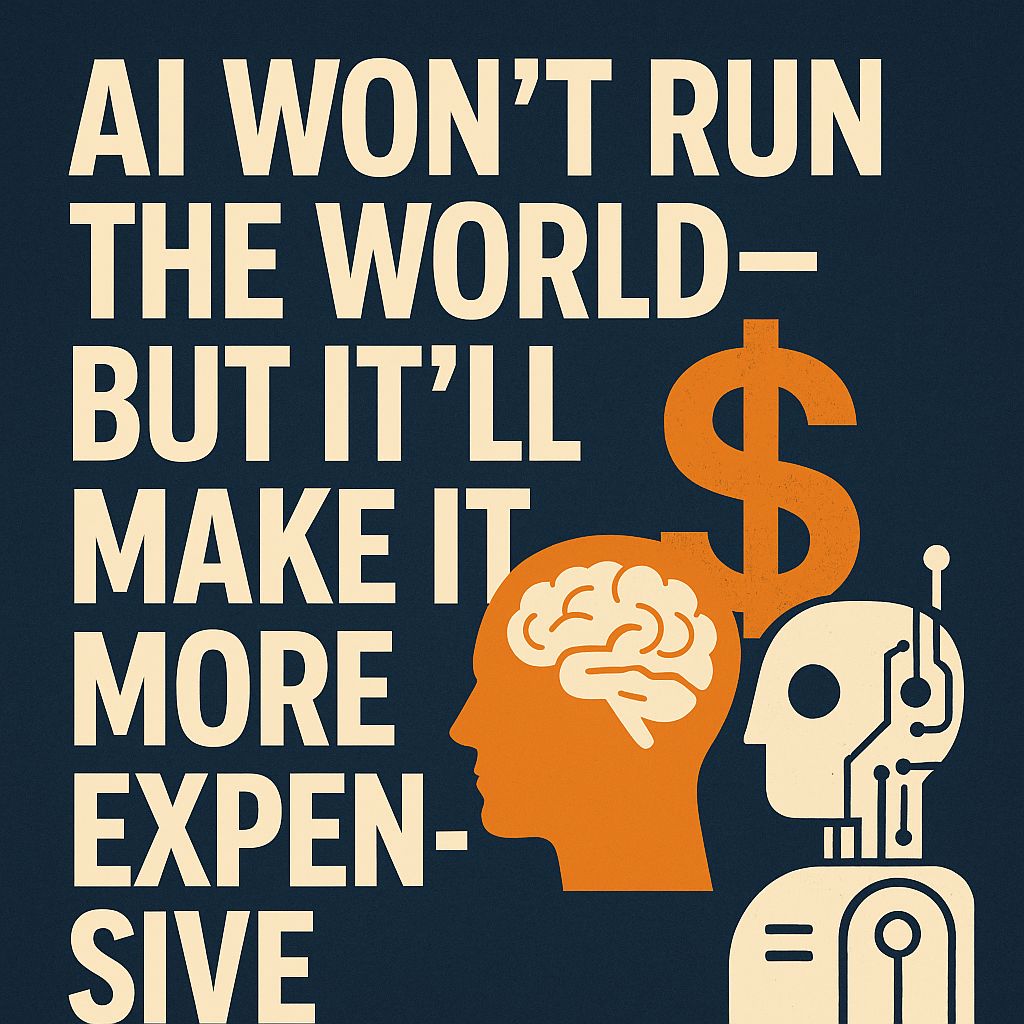
Stuck for an idea for an image and not wanting to filch something from a free image site, I thought I would give ChatGPT a go. I’d seen those AI generated memes that do the rounds and the image quality was improving. So, I cut and pasted my blog post into ChatGPT and asked ‘Please generate an image for the following blog post’. I’m even polite talking to computers.
‘Yes,’ said ChatGPT ‘this might take a moment.’
A moment later the message came up ‘Processing Image. Lots of people are creating images right now, so this might take a while. We’ll notify you when it is ready.’
Eventually the image was ready. I was pleased with the result as it captured the essence of my message. It got me thinking, however, how many people are using AI? Or more specifically Open-Source AI. I knew people who used it as a search engine, in fact google now consolidates its searches in an AI answer, but is everyone using AI to its fullest?
How Many People Use AI?
How many people use AI? Well, unknowingly many people are using it, indirectly. Spellchecks, chatbots and Google Assist searches are all be powered by AI; that’s not to mention Siri and Alexa. The OpenAI CEO, Sam Altman, recently revealed that around 10% of the world or between 800 million and 1 billion people use ChatGPT. (Source – Demand Sage). Another report suggests globally, AI usage projections will exceed 378 million users in 2025, according to the Edge AI and Vision Alliance. Either way, whichever figure you believe, that’s huge. However, it also means that 90-95% are not using AI directly.
How many people could use AI?
Theoretically most of the world’s population, could use AI. As of November 2024, approximately 5.5 billion people, or 68% of the world’s population, are online. (Source Deloitte). This is a figure that is expected to continue growing. Therefore, there is still a huge amount of growth potential for the deliberate use of AI as a tool.
The more people use Artificial Intelligence, the more people will find uses for it, but how much more energy will this require? Research indicates that AI’s energy consumption is projected to increase dramatically, with some estimates suggesting it could consume as much energy as a country like the Netherlands by 2027. (Source BBC). It will increase even more, as more people and companies use AI and more uses are found for it.
Human brain model of energy.
The human brain, despite making up only about 2% of an adult’s body mass, is a highly energy-demanding organ, consuming approximately 20% of the body’s total metabolic energy use. (Source Brainfacts). Put it another way, intelligence, whether human or artificial is energy expensive. Let’s progress this train of thought further.
Energy is expensive
Currently, the global usage of energy costs US$10 trillion, in all forms. Goldman Sachs Research predicts a 160% increase in power demand by 2030, due to the increase in AI usage. As we use AI increasingly, our global energy consumption will rise further. We all know the issues around current energy costs and that’s not to mention the security issues surrounding reliance on the global fossil fuel market.
So back to the human brain. To run the world, think of the amount of energy required.
If AI suddenly needed to replace higher human thought, the global energy supply wouldn’t cope. Even if the rise is gradual, new cheaper and more sustainable energy needs to be created.
We’ve not even talked about the physical resources required – batteries, memory chips and semiconductors. The metals, alone used in computers amounts to gold, silver, copper, aluminium, nickel, cobalt, platinum, palladium and tin. Think of the energy required to mine these compounds, not to mention the actual price of the metals themselves.
AI will become expensive
Artificial intelligence is already expensive to run, especially on the development side. To use AI can be even more expensive for more complex tasks. As an example, if you wanted to add an AI chatbot to your website or use a Virtual Assistant, this could cost you from £5,000-£20,000.
For the general user AI is currently mostly free, but as you require more ‘brainpower’ there becomes a cost attached. For instance, ChatGPT is free to do basic things like answering follow-up questions, writing and debugging computer programs, translating and summarising text. You can even generate a couple of images per day, for free. There are however paid versions rising to $200 per month (ChatGPT pro) if you need it to perform tasks like video generation. The CEO of Open AI has said that ChatGPT pro is losing them money, as more people use it. We’ve all seen those amusing videos of baby celebrities doing the rounds.
So, to summarize AI is expensive to run and will become expensive to use, the more people use it and the more uses we find for it.
Steam Power
I like to think of when steam power was first invented. At first it was used to pump water out of mines. As time went on more uses were found. At first in the textile industry, machines started to get powered by steam. Later industrial uses such as automation of factories and production proliferated. Later still, we used steam for transport with steam locomotives. Today steam is now used to generate electricity.
There will be more uses for AI and there will be a drive to more efficiency, just like steam’s use generated a more efficient energy source – electricity.
Humans will find more things that AI can do. AI will take the donkey work out of it but won’t be in charge.
A section of elite humans will always be in charge, just like the old mill owners who used the power of steam to create wealth and then power, today’s magnates will harness the use of AI to do the same. Yes, the individuals may change but there will always be people who want to be in charge and control. But that’s another story. You can read my post Who Controls the World, where I reveal who actually does. The answer will surprise you.
The doom-mongers will have you believe that AI will take over and humans will become redundant, however, with the right mindset and smart use of AI, we’re not being replaced, we’re being amplified. Do you agree or disagree? Let me know in the comments.