

My first fear when I heard about the onset of Central Bank Digital Currencies is they will be used by governments to snoop on us and try to nudge our behaviours around our spending habits. This is not to mention the potential for a government to try to punish certain spending and de-bank certain individuals. This happens, in places that already have a CBDC. So, in this next post in the series of the future of money I talk about how to stay free, flexible and financed in a CBDC world.
This post closes out the first raft of posts which lay the foundation of your knowledge of what’s coming. In future sections I will take a deeper look at practical steps you can take today to prepare.
A. Stay Free
As I alluded to before, freedom is my first concern around CBDCs. This is before we get on to their safety and hackability. Here are some things I would like to see the Central Banks implement in any system they plan to subject us to.
1. Leverage System Design for Privacy
Your ability to stay “free” within a CBDC system will rely on how well privacy is integrated into its architecture and governance.
We should engage in public debate and parliamentary scrutiny surrounding a potential CBDC in whatever jurisdiction we may be in. We should push for a privacy-by-design approach. Here are some ideas that will help:
Token-based systems
This would be like cash. A digital “token” would be more inherently anonymous than an account-based system, where centralised transaction records are kept.
Intermediated models
The central bank will only be able to see an aggregate balance from the payment service providers (PSPs). Any detailed transaction data would only be held by the PSP. This would be inherently more private than a direct-access model.
Privacy-Enhancing Technologies (PETs)
The use of advanced technologies like zero-knowledge proofs (ZKPs), can verify user information (e.g. age, sufficient funds) without revealing the underlying data or identity of the user.
Offline functionality
We should push for designs that allow for offline, cash-like transactions, which can further reduce digital footprints and reliance on continuous monitoring. It is likely that an offline function will be inbuilt anyway, so that they can be used without internet access, such as in rural areas or if there is an internet outage.
2. Utilise Anonymity Features
If your CBDC offers a “managed anonymity” approach or limited low-value anonymous transactions (like an “anonymity voucher” for a limited amount over a period), use those features for every-day, minor purchases. This way a government can’t snoop on your regular spending habits.
3. Demand Legal Safeguards
Anybody who is employed in marketing in Europe, will know all about GDPR (General Data Protection Regulation). Any CBDC should also support a robust legal framework, that restricts how your data can be collected, stored and used. It should require a court order for law enforcement for any government body to gain access.
B. Stay Flexible
In the first section above where we looked at how to stay free in the CBDC era, the actions we can take involve us trying to influence how they are designed and how legal structures should be put in place. In this section on how we can stay flexible, there are actions we as an individual can take now and some that we should take once they arrive.
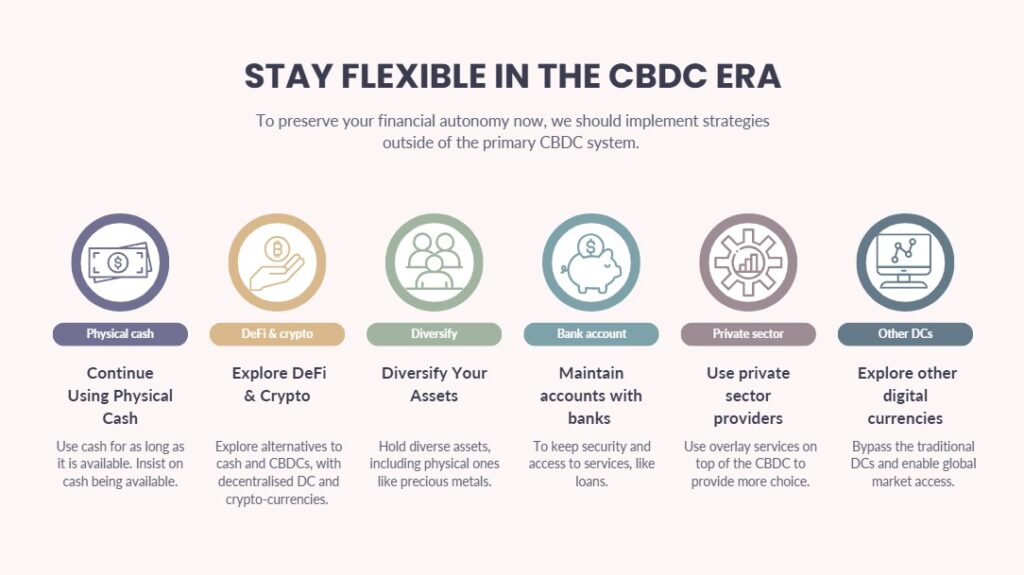
Even if all the safeguards are put in place above, a CBDC will still offer less transactional anonymity than physical cash. To preserve your financial autonomy now, we should implement strategies outside of the primary CBDC system. I’ve spoken more about these in a previous post Where Should You Store Your Wealth In The CBDC Era; however, they are worth repeating here:
1. Continue Using Physical Cash
As long as cash remains available, use it for transactions you wish to keep private. Lobby for the continued existence and acceptance of physical cash. Also use cash now as much as possible, to ensure that it is never removed. Potentially when CBDCs arrive, they will coexist with cash. It will then be even more essential that we keep cash alive.
2. Explore Decentralised Finance (DeFi) and Cryptocurrencies
Research and potentially use non-CBDC cryptocurrencies, especially those focusing on strong privacy features. Although they will likely be less stable than a central bank-issued currency they offer an alternative to CBDC and physical cash. Learn how to use digital wallets securely now.
3. Diversify Your Assets
Don’t keep all your wealth in a single form of currency, especially one which has the potential for programmability or control. Hold diverse assets, including physical ones like precious metals. I discuss investing in precious metals and other similar physical assets in my post Portable Property.

Diversifying your assets will also ensure you stay financed, see below.
4. Maintain accounts with commercial banks
CBDCs are digital forms of central bank money, while commercial bank deposits are private digital money. A healthy balance between the two will provide a mix of security and access to services like credit, loans and other banking products that may not be offered by the central bank.
5. Use private sector payment providers
Leverage the services offered by private fintech firms and payment service providers who build “overlay services” on top of the core CBDC infrastructure. These services may offer innovative, user-friendly functionalities and greater choice in how you manage your money.
6. Explore other digital currencies (with caution)
While highly volatile, other digital currencies or stablecoins could offer different features, such as the ability to bypass the traditional financial system or use in different global markets. Be aware of the risks and regulatory status of these alternatives.
C. Stay Financed
Staying financed, means to maintain your access to money. In a CBDC era, individuals should adapt their personal finance strategies, focusing on maintaining a positive credit history, diversifying savings and understanding the new digital financial ecosystem.
1. Maintain Access to Traditional Banking Services
While CBDCs may be safer than commercial bank deposits, traditional banks will continue to be a primary source of credit, such as loans and mortgages. Maintain a good relationship with a commercial bank to access lending, as banks may have incentives to offer more attractive deposit contracts and loan rates to retain funding and customers.
2. Build a Strong Credit History
In a CBDC system, the data from CBDC usage may be leveraged to build a credit history, particularly for those who were previously unbanked. Ensure responsible use of any available credit and timely payments to build a positive financial history, as “good” borrowers may receive lower interest rates on loans.
3. Diversify Savings
As we saw above, diversifying across both CBDCs and commercial banks can balance safety and potential returns.
C . Stay Informed and Adapt
CBDCs are a digital innovation and understanding how they work is crucial. This is the reason I am writing this series of posts, firstly to educate myself but also to pass on this information in a user-friendly way. Here are some steps you can take right now:
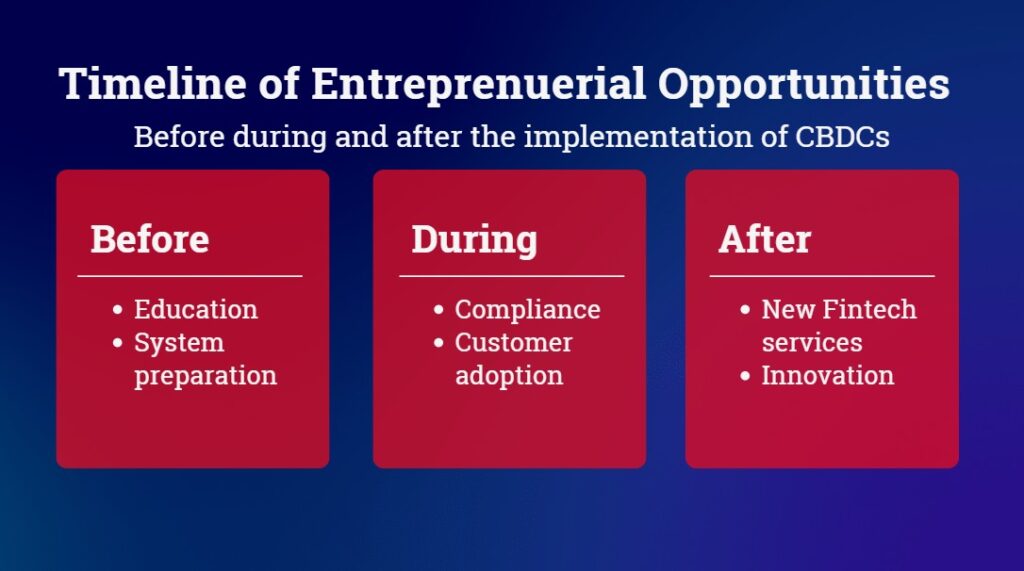
1. Educate yourself on the technology
Understand how the CBDC system in your country works. This knowledge will help you make informed decisions about managing your finances and utilising available features.
Stay informed about any specific features of your country’s CBDC, which can influence how you manage your money.
I would recommend checking your own country’s central bank like the Bank of England on a regular basis to stay informed.
2. Monitor policy changes
The design and regulations around CBDCs are still evolving. Stay informed about legislative changes, new features or shifts in central bank policy (e.g., on interest rates for CBDCs or programmability) to adapt your financial strategies.
Educate yourself on the various use cases for CBDCs (e.g., peer-to-peer, merchant, and cross-border payments) to leverage potential efficiencies
3. Engage with the system’s development (if possible)
Educate yourself on the specific design choices being considered in your region and participate in public consultations. The trade-offs between data use, privacy and public interests (like preventing money laundering) are a matter of intense public debate and are not yet settled.
Central banks will often seek public feedback during the design phase. Participating in these discussions can help ensure that the final CBDC design incorporates user needs for flexibility.
4. Prioritise Privacy and Security
Be aware of the privacy settings and regulations associated with your country’s CBDC. While many central banks are prioritising privacy-by-design, a “digital trail” of transactions will be inherent. Understand what data is collected and how it’s used to make informed decisions about your transactions.
By proactively managing these areas, individuals can effectively navigate the transition to a CBDC era and maintain a secure financial position.
Closing
The rise of Central Bank Digital Currencies doesn’t have to mean the loss of personal freedom, flexibility or financial control. It simply means the rules of the game are changing. The winners will be those who understand the system early, adapt intelligently and build buffers around their independence.
By staying informed, diversifying your assets and pushing for privacy-by-design, you position yourself not as a passive subject of policy, but as an empowered participant in the new digital economy.
The next stage of this series of posts will move from awareness to action. I will be showing you the practical, step-by-step strategies to protect your wealth and keep your options open in a world where money itself is being rewritten. Sign up for the newsletter so you don’t miss out.
Until next time, stay alert, stay adaptable and above all, stay free.