

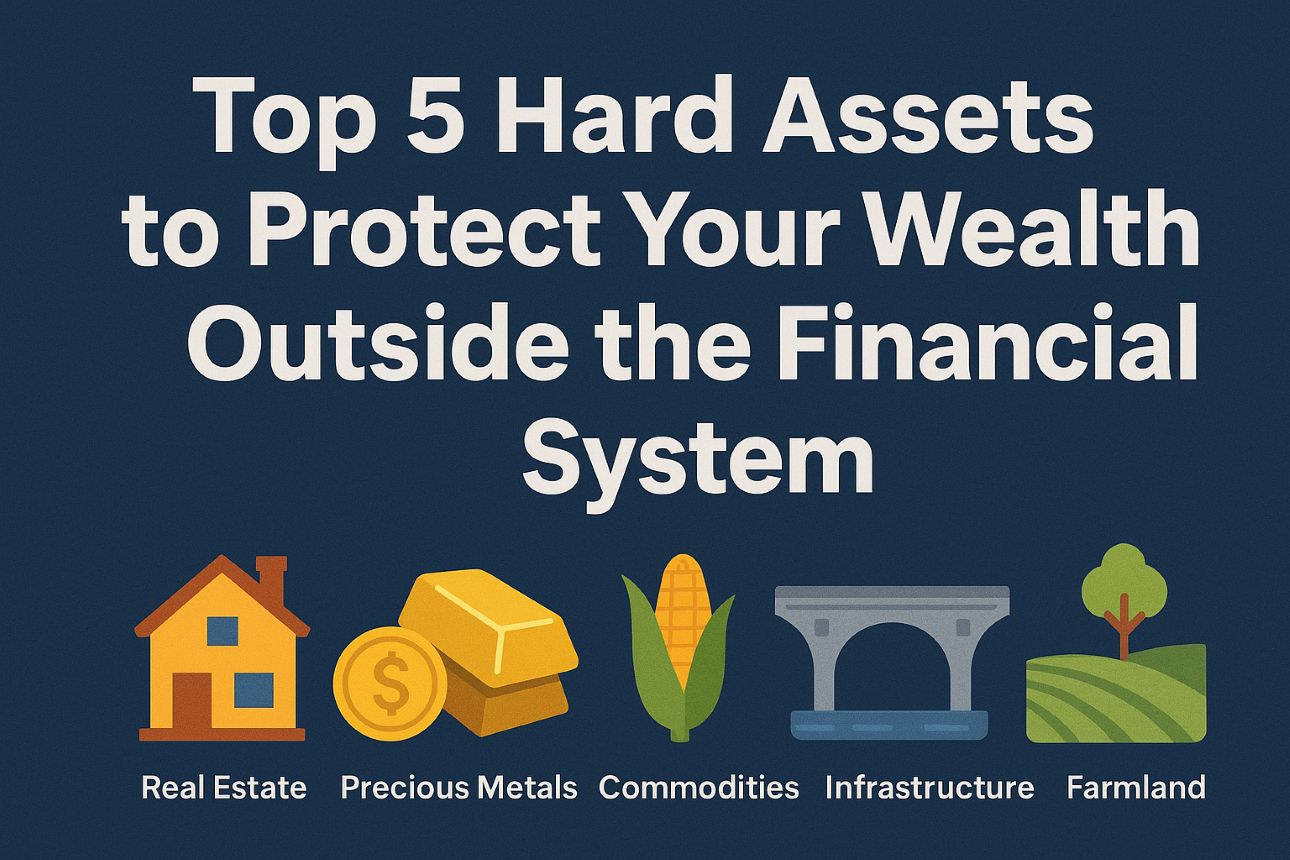
As we progress through this series of the future of money, we’ve already looked at CBDCs (Central Bank Digital Currencies) in depth and now we are starting to look at strategies you can put in place now, to protect yourself against inflation and other economic issues that may appear. In the previous post we specifically looked at How to Build a CBDC Resilient Property Portfolio. I touched upon asset allocation and mixing your portfolio with other non-property assets. In this post I will describe the top 5 hard assets to store wealth outside the system.
What are hard assets?
A hard asset is a tangible and physical item that has intrinsic value. The asset may be used to generate income, like real estate or machinery. Other hard assets such as art and collectibles do not generate income but are a store of wealth, against inflation and outside of the digital system.
Hard assets are often long-term investments. The reason that they serve as a hedge against inflation and economic downturns is because of their physical nature and utility. Inflation means the reduction in the value of money against other items such as consumables but also hard assets.
They are valuable for security, as they retain value over time and can be resold. This not only means that you can make capital gains, but it also makes them ideal collateral for loans. I.e. banks can safely lend you money, knowing that they can take possession of the asset, sell it and recoup their investment.
Aside from a hedge against inflation, is that hard assets can offer privacy versus a CBDC.
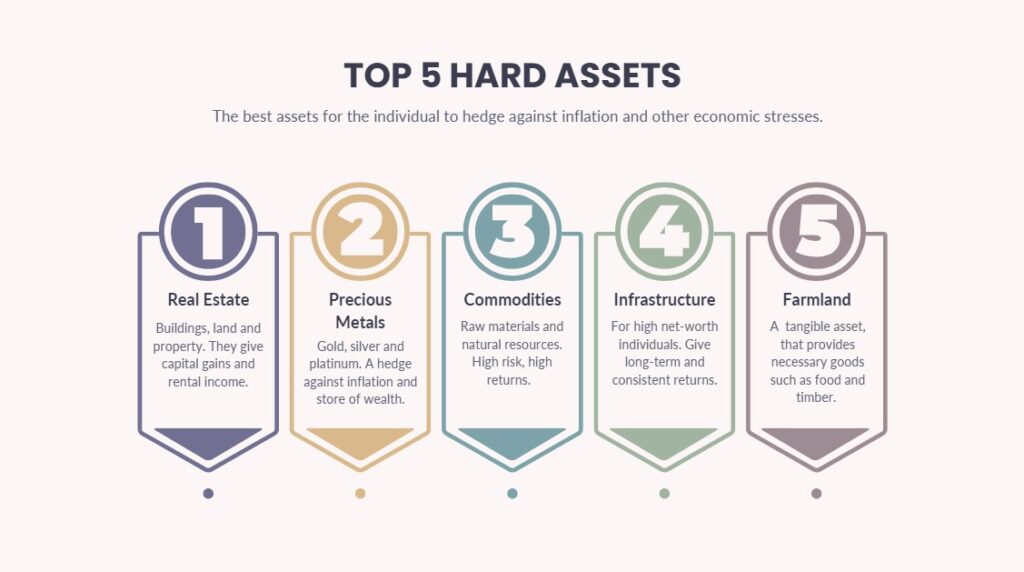
Top 5 Hard Assets
So, here are my top 5 hard asset recommendations for the private investor. I’ve put them in order of investing i.e. Start with the first before moving on to the next.
Disclaimer:
Just because I’m financially independent doesn’t mean you can sue me if you blow your savings on crypto llamas. This blog is for education and entertainment—not financial advice. Before making any money moves, speak to a qualified (and hopefully not-broke) Independent Financial Advisor. You know, the kind with certificates and a filing cabinet.
Real estate
Real estate can include buildings, land and other property. They are income-producing assets. The reason I love real estate as an investment is because you get capital gains where the value of the properties goes up over time. You can also achieve rental income, which also tends to rise with inflation. Real estate can be invested directly, where you as the purchaser own the property, or indirectly through REITs or Real Estate Investment Trusts.
I would class real estate as a separate asset class within my asset allocation i.e. for me: Real Estate 40%; Equities 35%, Cash 15%; Other 10%. I would class all the following under my ‘Other’ asset classes and so I wouldn’t want more than 10% exposure.
I would definitely suggest that if you are thinking of investing in hard assets, then real estate should be the starting point, because it is accessible and gives you cashflow when done correctly. I’ve written much more on real estate investing, if you are interested, I would suggest starting here.
Precious metals
Aside from property the next hard asset class is precious metals. Precious metals include gold, silver or platinum, as the most common. They are often held as physical bullion or coins, either in person at home, in safety deposit boxes or via third party storage companies. Precious metals have an extra advantage in that they are considered an “alternative currency”. For instance, Britannia Gold Coins are considered legal tender in the UK. The face value of a 1 oz Britannia Gold Coin is £100 although the gold value of one of these coins is over £3,000 at the time of writing, so you wouldn’t want to spend one of these!
Precious metals are also a traditional store of value, especially during economic uncertainty or currency devaluation. Metals like silver and platinum also have industrial value in that they are key components in many electronic, medical, energy and industrial spheres. This means that they are likely to be used up, so their value should rise, unless more is mined. Apart from owning metals directly, you can also buy gold ETFs (Exchange Traded Funds). You can also gain exposure to metal investments via mining stocks.
I will be delving more into precious metals in a later post. Stay tuned.
Commodities
The next hard asset class is commodities. These are physical goods like oil or agricultural products. They are raw materials or natural resources that have utility and so will always have value. However, that value can change and often quickly; They are therefore a risk. I would say that for the private individual they should be invested in, only as part of a wider portfolio to hedge against inflation. Prices are an indicator of future inflation and you can gain high returns during inflationary periods.
Direct ownership of commodities is not feasible so you would purchase shares of companies who trade commodities. You could also invest in commodity ETFs or futures contracts.
Infrastructure
For high-net-worth investors, infrastructure is the next hard asset class.
Infrastructure can include roads, bridges and utilities and are usually held in private companies. They could also include essential public works such as toll roads, data centres or renewable energy projects.
Infrastructure investments have the potential for high long-term returns and consistent income streams. They can be invested in via private equity funds or private infrastructure funds.
Farmland
Farmland is a tangible asset that produces a necessary good: food (or timber as in the case of forestry land). It offers diversification and income potential. There is also a historical correlation with inflation protection.
I’ve included farmland as a separate asset class, although it could be included with Real Estate. Again, farmland can be invested in directly, but you could also invest in farmland investment trusts.
Others hard assets to consider
- Machinery and equipment: This would include manufacturing machines, construction equipment and vehicles
- Other physical items: Furniture, supplies and inventory
- Artwork: Collectibles and valuable pieces of art.
Summary of the key benefits of hard assets
So why should you consider investing in hard assets now, before CBDCs kick in to play? Here is a summary of the benefits you will get:
Tangible
They are physical objects that have a concrete form you can see and touch. Unless they are physically stolen, they cannot be taken away via a click of a button. See my post on What is a CBDC and Why It Matters to Everyday Investors where I talk about how governments could de-bank individuals and also influence how money is spent with programmable money.
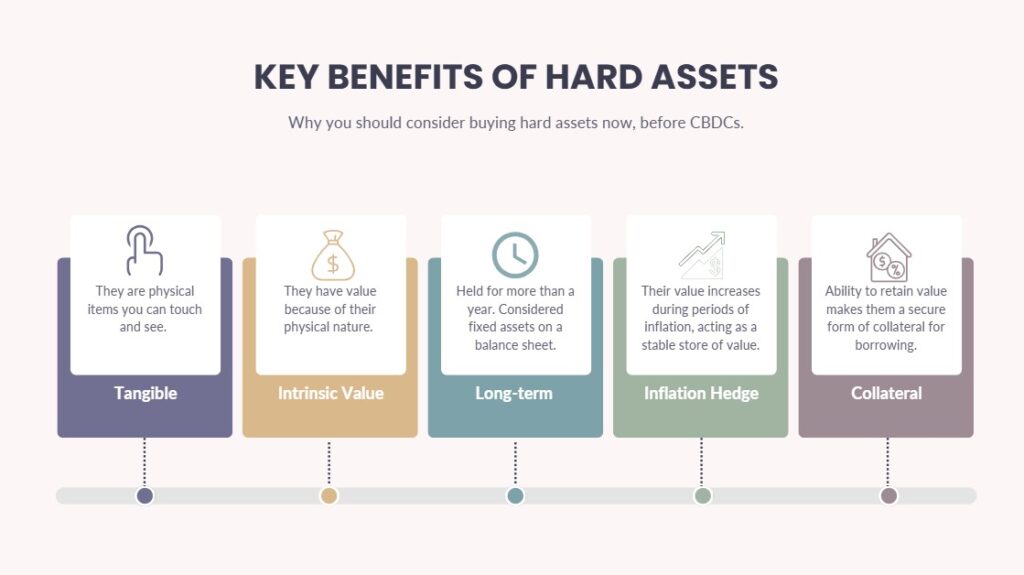
Intrinsic value
Their value comes from their physical nature and utility, not from a claim on future earnings like stocks.
Long-term investment
They are typically held for more than a year and are considered fixed assets on a balance sheet.
Inflation hedge
Their value may increase during periods of inflation, acting as a stable store of value.
Collateral for loans
Their ability to retain value makes them a secure form of collateral for borrowing.
One major downside: Illiquidity
Some hard assets are not easily or quickly bought and sold, so they cannot be easily converted to cash. They hold a place in an investment portfolio, but that should also include liquid assets such as cash and equities.
Closing
As we move deeper into a world where money becomes more digital, programmable and tightly monitored, the smartest play is to build a foundation that sits outside the system and can’t be switched off.
Hard assets give you that backbone. They hold their value, weather inflation and give you real-world leverage when everything else feels uncertain. You don’t need to overhaul your entire portfolio overnight. Just start with one solid step, build momentum and layer in the next asset as your confidence grows.
Over time, you’ll create a resilient, diversified base of wealth that works for you regardless of what happens with CBDCs or wider economic shifts.
In the next post, we’ll dig into Crypto-currencies and how these might fit your long-term strategy. Sign up for the newsletter, so you don’t miss out.