


In a previous post in this The Future of Money series, we discussed how the Top 5 Hard Assets to Protect Your Wealth Outside the Financial System. Those asses were Real Estate, precious metals, commodities, farmland and infrastructure. This week we take a deeper dive into precious metals and in particular How Gold and Silver Fit into a Modern Wealth Plan.
Gold and silver fit into a modern wealth plan primarily as hedges against inflation, market volatility and geopolitical uncertainty. They serve as safe-haven assets and diversifiers. They also provide tangible ownership, which can offer peace of mind. Precious metals can also have specific tax advantages in some regions. For instance, Britannia gold coins are legal tender in the UK and as such are not liable to Capital Gains Tax.
While gold is known for stability, silver’s higher volatility offers potential for greater gains and is also in high industrial demand.
Let’s look at both in turn, before we get on to how you can invest.
Key functions of gold in a modern wealth plan
Hedge against inflation and currency devaluation:
Gold has a long history of retaining its purchasing power when fiat currencies lose value. Its limited supply and intrinsic value protect wealth during periods of rising prices.
I love the story about how gold holds its value over the centuries:
In ancient Rome, an ounce of gold could buy you a fine toga. Fast forward to the 1920s and an ounce of gold was about $20. Guess what? That ounce could buy you a tailored wool suit. Oh, and a good pair of shoes and a belt. Moving to the present day, at the time of writing the same ounce of gold is now worth over $4,000. You guessed it. You can still purchase a luxury business suit and premium accessories from high-end brands, for the same price.

What this tells us is that the cost of gold relative to the cost of goods remains the same overtime. The price of gold and a good business suit will rise in price. The other way of saying this is that the value of our fiat currency depreciates over time due to inflation.
Portfolio diversification
Apart from protecting your wealth due to its stability over time, gold also tends to have a low or negative correlation with other traditional assets like stocks and bonds, particularly during periods of economic stress. What this means is that if you have a modest allocation of gold, in your portfolio, this can help reduce overall portfolio volatility. Ie. As your stock prices crash, the price of gold goes up. If you have a portfolio with, say: stocks, real estate, gold and cash, your overall net worth will remain the same, even if there are individual asset crashes.
Safe-haven asset
The next reason to hold gold is that in times of financial and geopolitical turmoil, gold is seen as a reliable store of value, attracting investors seeking to protect their capital. This is the so-called flight to gold. If stocks, real estate and cash all plummet, then gold becomes the haven.
No counterparty risk
Owning physical gold means you own a tangible asset outright. You are not dependent on a financial institution or a government.
Key functions of silver in a modern wealth plan
Higher growth potential
Silver is more volatile than gold. This means that it offers the potential for higher short-term returns for more aggressive investors. This volatility allows it to serve as a growth complement to gold’s stability.
Industrial demand
Silver is a critical component in many modern industries, including electronics, solar panels and electric vehicles. This industrial demand provides additional support for its price and offers exposure to long-term trends like green energy.
Affordability and liquidity
Silver’s lower price point compared to gold makes it more accessible for a broader range of investors. It is a lot easier to get started buying this asset. It is also a highly liquid asset that can be easily traded.
Diversification within precious metals
Allocating to both gold and silver provides diversification within the precious metals asset class itself, allowing investors to benefit from the distinct characteristics of each. Ie stability for gold, growth/volatility for silver.
How to invest
Here are the various ways to gain exposure to precious metals such as gold and silver in your portfolio.
Disclaimer:
Just because I’m financially independent doesn’t mean you can sue me if you blow your savings on crypto llamas. This blog is for education and entertainment—not financial advice. Before making any money moves, speak to a qualified (and hopefully not-broke) Independent Financial Advisor. You know, the kind with certificates and a filing cabinet.
Physical bullion
Firstly, you could buy and store physical gold and silver coins or bars. This provides direct ownership and minimises counterparty risk. Storing them at home can be easy and is free, but you run the risk of theft. You can store them in safety deposit boxes or with professional storage vaults for a fee to mitigate this.
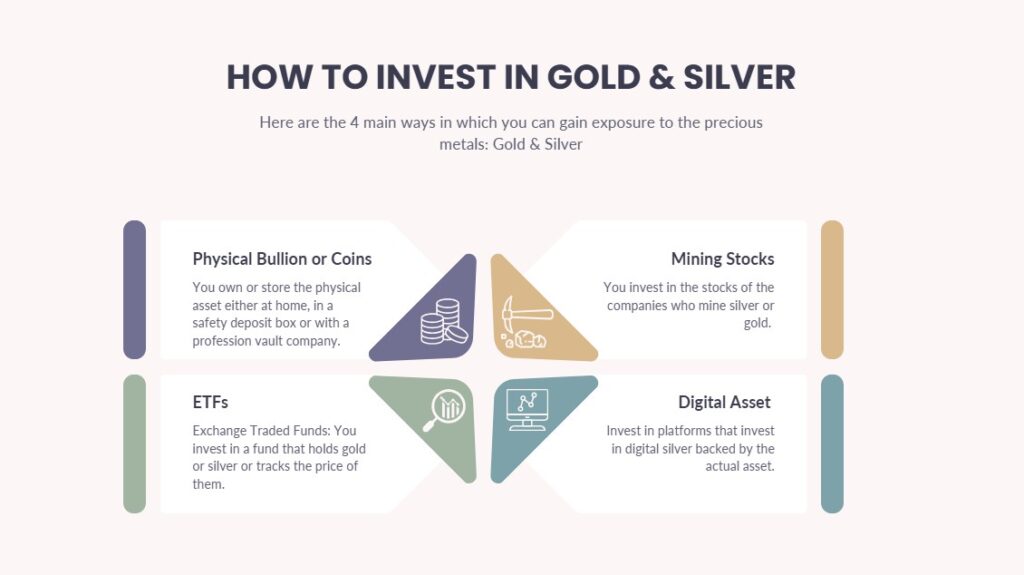
ETFs
Exchange-traded funds (ETFs) are investments that hold physical bullion or track the price of the metals. This gives you a convenient way to gain exposure without the need for physical storage. You do lose an element of control with this option, though.
Mining stocks
Another indirect method of investing in these precious metals is to buy the stocks of gold and silver mining companies. This gives you indirect exposure and can be more volatile due to company-specific risks.
Digital silver
Platforms that offer digital silver, backed by physical bullion, provide a convenient, highly liquid and secure option for investment. See my post Where Should You Store Your Wealth in the CBDC Era? In the post I give you an overview of Hard vs. Digital Assets and what they are.
Considerations for your plan
Gold and silver can be powerful tools for wealth preservation, but they are not a “magic shield” against all market risks.
While gold provides stability and inflation protection, silver’s higher volatility offers greater growth potential, making a blended approach beneficial.
Consider how to best incorporate them, whether through direct ownership, ETFs, or other vehicles, based on your risk tolerance and financial goals. You should also consider what percent of your portfolio you should allocate. For instance, in my portfolio I aim for 40% Real Estate; 35% Equities; 15% Cash and 10% Other. Precious metals could come under your ‘Other’ asset class along with say, your vehicle, any collections you have, jewellery or crypto.
Summary
Bringing it all together, gold and silver aren’t about chasing fads or trying to outsmart the market. They are about building a resilient, future-proof foundation under your wealth. They give you ballast when everything else feels shaky and they offer real, tangible value in a world that’s becoming increasingly digital and unpredictable.
Whether you choose physical bullion, ETFs or a mix of both, the key is to be intentional and build an allocation that strengthens your overall plan. Start small, stay consistent and think long term. Your future self will thank you for adding assets that have protected purchasing power for thousands of years—and still play a vital role in a modern, early-retirement-ready wealth strategy.
In the next post, we will look at investing in a decentralised financial protocol. You won’t want to miss it. Sign up to the newsletter so that you don’t miss out.