In my Financial Independence journey, I started by wanting to get to a position, so that I didn’t have to work again. As time went on this changed so that Financial Independence, to me is the state where I only work on the things I want to. A subtle difference but the distinction is that now I say don’t stop working.
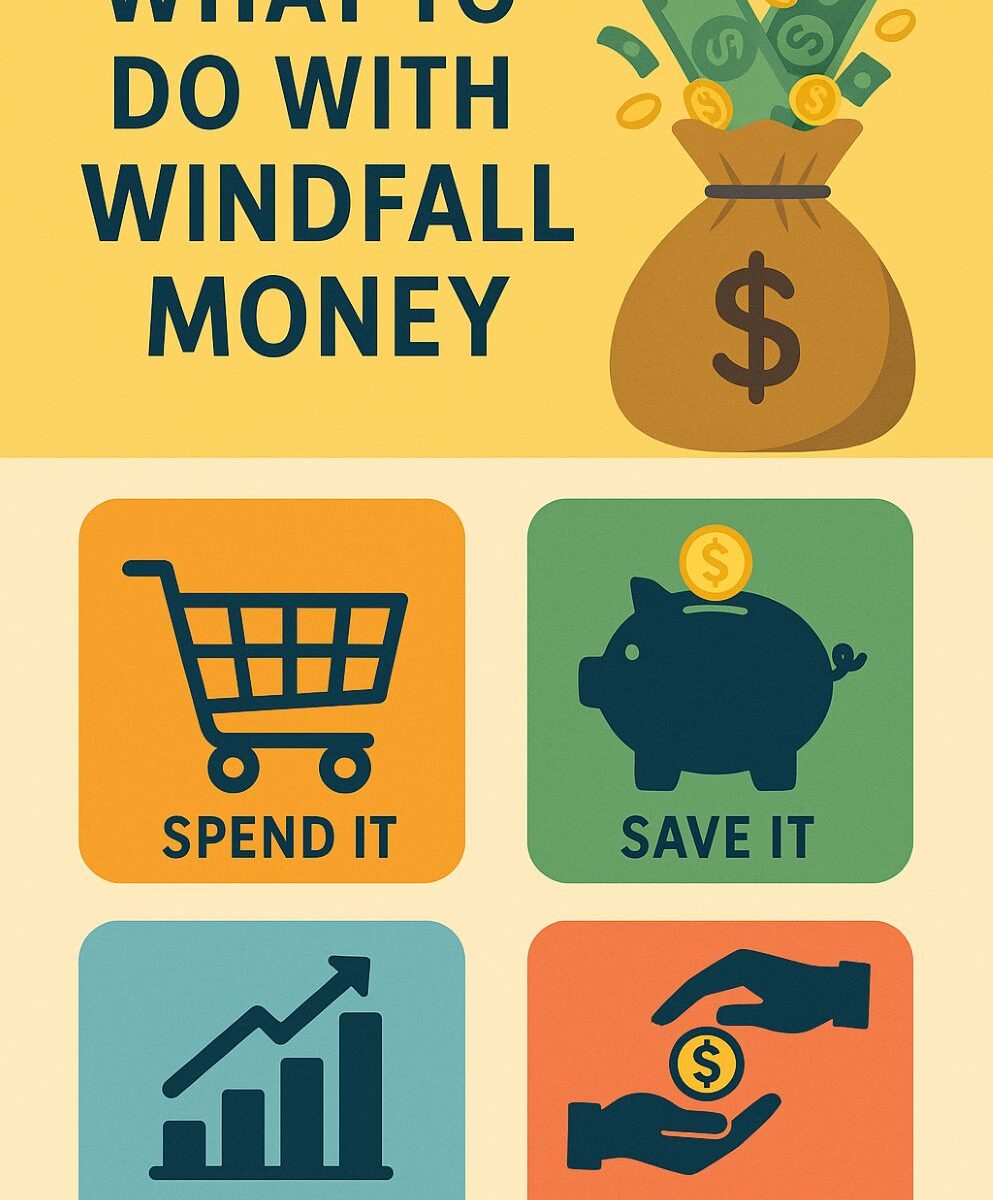
Have you or are you about to come into some windfall money? Do you know what you are going to do with it? Here is a guide of what to do with windfall money.
If you are like me, you didn’t learn about personal finance at school. Your parents hopefully gave you a few nuggets of good advice around living below your means and saving for a rainy day. Everything else you may have learned about money you may have picked up from society and the media.
As you are reading this blog, you are obviously searching for answers to life’s questions as I was – and still am. Books remain, the best source of advice along with trusted mentors and coaches. Over the years I’ve read thousands of books on personal development, finance, sales and business. Out of all the books I’ve read on personal finance here the ten which I believe are the best to start you on your quest.
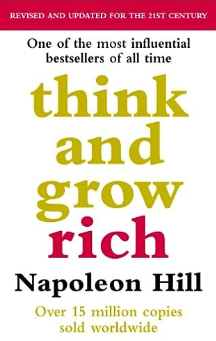
1. Think and Grow Rich – Napoleon Hill
Hill wrote Think and Grow Rich in the early 20th century and it remains a classic guide to getting the right mindset around earning money by providing some kind of service. The author was asked to draft the book by his mentor, the great industrialist Andrew Carnegie. Hill then spent the next 20 years studying the great wealth producers of the time. He then distilled all he learned into this book. The introduction starts with the teaser, that the secret to riches is mentioned in every chapter. You are asked to read and reread the book, to let its messages sink in. 20 years after I first read this book, I still make sure I reread it every year.
2. Rich Dad, Poor Dad – Robert Kiyosaki
Rich Dad, Poor Dad was the second book I read on money, shortly after reading Think and Grow Rich. The first reading of the book made me angry. Yes, I was furious. Not because of Kiyosaki’s style but because he made me realise that what society tells you about money is incorrect and in some cases very damaging.
The book is semi-autobiographical in that it shows how a young Robert first learns that his friend Mike’s dad is very wealthy and has a completely different philosophy around money compared to his real dad. Robert loved his real Dad but stated that he had followed the traditional route of Education – Job- Pension. When Real Dad realised his pension wasn’t going to support him, he belatedly looked at business as an option. Unfortunately, he was lacking in the skills after spending his career working for local government.
This book really changed my outlook on therefore my habits. From paying yourself first to producing your own monthly cashflow statements, these habits have helped me get to a point of financial independence.
My big takeaway from this is that you should take responsibility for your own financial education as early as possible. Get a job to gain knowledge and experience, so you can eventually start your own business.
3. Cashflow Quadrant – Robert Kiyosaki
The Cashflow Quadrant expands on the themes in Rich Dad Poor Dad and is a more practical ‘How to’ book. It introduces the four quadrants of financial outlook:
E – Employee. The place where most people start (and usually stay). You get a job, earn a wage and hopefully save enough for retirement, without getting downsized.
S – Self-employed. Here the technician goes it alone. They are master of their own destiny and have the benefit from a tax point of view. The downside is they are still tied to the business. I.e. if they don’t work, they don’t earn.
B-Business owner. People in the B quadrant have learned the art of leverage. They have set up systems and teams of employees who do the work. The measure of how successful the business owner is, is how long they can stay away from the business without it falling apart. They work On the business, not In the business.
I-Investor. A person in the I quadrant invests in other businesses. They may have been a successful Business owner who sold their holdings and now reinvests their profits for higher returns.
4. Your Money or Your Life – Joe Dominguez & Vicki Robin
The premise of Your Money or Your Life is that every pound you have in your net worth represents an amount of time you don’t need to work. Using the rule of 4% Ie take 4% of your net worth and this is the amount you can live off per year which will ensure your nest egg doesn’t deplete and keeps pace with inflation. This is providing you invest it in the appropriate vehicles – the book describes what these are.
Conversely, every pound you do spend is a pound you don’t add to this savings pot and therefore is time you must keep working. For instance, say you spend £1,000 per year on your annual holiday. That would equate to £25,000 you need extra in your financial independence pot to be able to pay for this every year. (£1,000 is 4% of £25,000). Let’s say you earn £25 pounds per hour. That means you will have to work an additional 1,000 hours in your life to afford to take a £1,000 holiday per year. (More if you consider tax).
You should therefore question your spending and ask if each item or service you receive is worth the amount of extra time you would need to work. Let’s look at our holiday example again. For you, it might be non-negotiable that you want an annual holiday every year and so those extra hours work would be worth it.
If you go through this exercise with all your expenses, you will get a feel for what things in life, you buy, that give you true value.
5. Early Retirement Extreme – Jacob Lund Fisker
As I approached Financial Independence and studied more on the subject, I came across the FIRE movement. FIRE or Financial Independence Retire Early, says that once you build up a net worth, of which a 4% withdrawal rate is enough to life on, you are free to retire (see no. 4) . The Early part of the equation states that you can cut your expenses to such a level that your net worth number doesn’t need to be as high as you think.
Jacob Lund Fisker’s book describes how you can take this to an extreme level. It goes beyond frugality and doing simple DIY tasks to cut costs. This is a way of life. For me it goes too far, but for many people it can be a way out of the rat race.
6. The Millionaire Next Door – Thomas J. Stanley
The Millionaire Next Door isn’t a practical book as such, but is the result of an exhaustive survey on several thousand millionaires in the US. It breaks down how real millionaires live their lives, such as what they spend their money on. Do they invest? And in what? It even looks at trends such as when they met their spouse, to even whether they repaired old shoes or bought new.
The premise really is that you wouldn’t be able to spot a millionaire in the street as they don’t look stereotypical. They wear ordinary clothes, usually unbranded and they drive sensible utilitarian cars. The lesson is that if you are an aspiring millionaire, do you do what real millionaires do? If so, you too can join them.
7. The Richest Man in Babylon – George Samuel Clason
The Richest Man in Babylon is a short book of fables about some characters in ancient Babylon, who have the same worries and aspirations around money as we do today. For instance, why certain people get rich, whilst others struggle month to month. Is there such thing as luck or are lucky people doing certain things to get in the way of opportunity. It describes how these characters learn, from a rich man, some simple rich habits, that we too can start today. These include paying yourself first – allocate 10% of your earnings before you spend on anything else and put this away to save. Once this savings nest egg reaches a certain level, you can then invest it for further growth. The book warns us though to take advice off trusted and experienced experts before investing.
8. The Millionaire Fastlane – MJ Demarco
The Millionaire Fastlane goes against the grain of most personal finance books. Demarco is quite disparaging of the get-rich-slow school of thought. He shows us how he himself escaped the rat race by creating a business, rather than saving and investing. I thought the NECST model of business, that Demarco advises, is particularly useful to evaluate potential business ideas. The NECST model asks us to analyse our opportunity to see if: N – there is a Need. Will people buy what you’re selling. E- how easy is to Enter this business? Ie the easier it is, the more competition there will be. C- how much Control do you have? E.g. Do you rely on one platform owned by another company? Think Amazon, Google etc. S- can you Scale your business? The more you can scale the wealthier you will be. Think McDonalds vs a single restaurant. T – can you take your Time out of the business. How reliant on you is the business? Can you take a month’s holiday and the business will still be running when you get back.
9. Failsafe Investing – Harry Browne
Failsafe investing introduced me to the Asset Allocation called the Permanent Portfolio. Here Browne advises splitting your assets into four classes of equal amounts – Gold, Cash, Bonds and Equities. At the end of the first year your whole portfolio should have grown, but each class will have grown at different rates, fallen or stayed static. You would then adjust your asset allocation so that all four are at parity again.
Then just repeat this process every year and you will, Browne assures us, match the markets.
In effect this model ensures that you sell assets high and buy low. As each type of asset class performs differently in different markets, your overall portfolio should grow regardless of whether we are in high/low inflation or bull/bear markets,
10. Becoming Rich – Genevieve Davis
Becoming Rich takes a magical stance on money management. I particularly found useful the money buckets system, which I’ve seen elsewhere but this one resonated with me. Every time you receive money, whether it’s a salary payment, windfall or sale of an item you split it into 5 buckets with a ratio of 10:10:10:10:60
10% – give
The key to this system and why it is magic (psychological) is that you are earning money for others as well as yourself. This seems to take away some of the guilt some people can have around earning money. Often, we have negative baggage around money, from things we picked up in childhood. If we can eliminate these negative beliefs, we open ourselves up to receive more. Becoming Rich advises us to remove 10% of the money you receive and put it into a separate account for gifting. We can then use this money to give to worthy causes that we believe in. It shouldn’t feel like an obligation but if we can find a cause or causes that we emotionally resonate with, then we will feel positive about gifting. Tithing has been practiced ever since money has been around. People have noticed that as you gift money, you receive even more. I’m not sure how this works but try it out for yourself.
10%- save
Guilt around money is not the only negative emotion around money. Worry must be the second emotion to eliminate. Often, we worry that we don’t have enough or that we may be met by some financial emergency in the future. Setting up a separate savings fund is really an entry-level personal finance habit, but in this method, you remove 10% of the money on the day you receive it. Then put this into the savings account. It should be automatic and we should never dip into it for treats etc. Use this fund as a buffer against the worry of future mishaps.
10%- fun
Another negative trait that blocks our abundance is the fear of losing what we have. By having a fun fund, we can spend money on ourselves guilt free. Here you have a finite amount of money you can do anything with. It’s a specific amount you know you can blow. On the other side, though, it will force yourself to feel good about spending some money. After all what’s the point of earning money if you can’t enjoy it now.
10%- other
The Other fund can be for things like a debt repayment plan, investment plan, saving for a specific big-ticket item or whatever. You are free to decide.
60%- live off
You’ve allocated 40% of you income into specific buckets so you will need to live off the rest. This may be a challenge at first, but you can start off with smaller than 10% buckets and work up to it. What is important are the habits this process creates.
Conclusions
So, there are my 10 favourite personal finance books. Have you read any of them? Do you agree? What books have made an impact on your finances? If you are just starting on your personal finance journey, I would recommend starting with the three that have had the most impact on my life:
Investing in property is a fantastic way of building your wealth and providing a sound base for financial independence. Unless you are planning to flip the property, that is buying and reselling for immediate profits, you will need to find a tenant to rent your property for regular rental income. In this post I describe the steps to successfully get a tenant in your rental property. All this assumes that you have completed the purchase and you own the property legally.
Why have I set up a Limited Company to buy property in the UK?
I decided to set up a Limited Company to buy property investments. I had two rental properties in my own name and when I worked out my profits after tax, I was horrified to see that I just about broke even.
Be yourself is a common aphorism in self-help but what does it actually mean. Terms like this from so called experts really annoy me. Yes, sure I would be myself if I know how to. I’ve meditated on this for some time and I think I’ve discovered a solution. First, we must define who we are.
Have you ever stopped a regime of good habits, or fallen off the wagon? Whatever that wagon is for you. How do you get back on track? Here is how I got back on track.
I’ve read lot’s of books on the art of communication as I’ve had a career in sales. Sometimes, though, real life is the best teacher.
“It’s your posture”, she told me.
“That’s what’s causing your bad back”.
These were the fateful words uttered to me, by my G.P. on that fateful day in November 2003.
What follows is a sorry tale of misunderstanding and woe; A modern fable on communication. It’s something only Count Arthur Strong could better.
By telling you this I merely wish to caution you on the importance of listening carefully. You see, my friend, the truth is stranger than fiction.
My Doctor went on to explain that I needed to improve my posture. She then proceeded to refer me to a Physiotherapist, to show me how and to give me some exercises to do.
She then slid the piece of paper, she had been scribbling on, across the desk in a way only G.P.s do.
Nadine, Physiotherapist
Whitefield NHS Clinic
Friday 4th November 9.15AM
I picked up the chitty and carefully folding it and slipping it into my pocket, I offered my sincere thanks. With that, my fate was sealed, the dye was cast.
The Appointment
At precisely 9.14AM, on November 4th 2003, I launched into Whitefield clinic only to find the receptionist on the phone, deep in communication with another patient.
I waited for eye contact.
9.15AM
“Come on” I whispered to myself.
She’s still gabbing on the phone.
There was a bell on the counter, like the one in Faulty Towers.
Should I ring it, whilst she’s there in front of me?
9.16AM and finally eye contact.
The receptionist finished the phone call.
“Michael Holden, to see Nadine the Physiotherapist – 9.15”, I announced.
“Ok, I’ll let her know. Please take a seat, she’ll be out shortly.”
9.17AM – I sit down in the waiting area. Not long now.
I browsed idly through some back issues of Country Life, as you do.
It was 10.03AM that I realised there might be problem.
“Is there a problem?” I asked. “Only I’ve been waiting over three quarters of an hour and I’ve not been called.”
The receptionist said she would check for me.
Just then Nadine come out of her surgery and quickly looked me up and down, with a puzzled look on her face.
“What time did you think you should have been here?”
“9.15 today”.
“But we’ve no record of your appointment. I’ll tell you what, I’m free now for an initial consultation if you ‘d like?”
“Let’s go then” I rebounded. As I followed her to the surgery.
The Surgery
Now let me tell you, this was the strangest physiotherapy surgery, I’d seen, even though I’d been in precisely zero before this day. There was a couch, though and Nadine indicated to me to sit down on it.
As I sat down, I noticed a statue of a head on the shelf. You know the ones which show the regions of the brain on it. I thought the NHS must be looking into using the mind to control back pain. Enlightened.
Then in all innocence I asked Nadine if I should take my shirt off now. She recoiled in shock, but quickly regained her composure.
“Do you feel you need to undress?”
“Well, I did at my GPs, she had a look at my back and then sent me to you.”
“Well I think you better stay dressed. What seems to be on your mind then?”
The Punchline
What a strange question for a physiotherapist to ask. It was at that precise moment that there was a knock at the door, which opened, and a uniformed lady popped her head round it.
“Excuse me Nadine” she said politely.
“Oh, hi Nadine, what can I do for you?” replied the first Nadine.
“Well, I seem to have lost one of my patients and Margery on the front desk said he might be in here. Mr Holden, I presume?”
Then as I sheepishly got up to follow Nadine no. 2 to her surgery, my eye caught the sign on the door.
PYSCHOTHERAPIST
What are the chances of that happening? Me living in a sitcom.
See if you can spot each example of poor communication in the above. Let me know in the comments.
What time is it? What do you do when someone asks you that question? Chances are you look at your watch or phone. Why is that? How did time get there? Well, I’m going to tell you. 3 or 4 minutes in the future (if you keep reading) you will be able to identify the key milestones in the history of time.
The first time
First, lets go back in time. Way, way back, into prehistory. Imagine if you had asked someone then the same question. What would be the answer?
When should we sow, when should we reap? The seasons gave us the answer. So, the answer would be, for instance, Harvest Time. Or it would’ve been whatever season depending on the orbit of the earth around the sun – the year. Although to be fair, from their perspective the sun travelled round the Earth.
That other celestial orb that travelled around the earth was useful too. The moon waxed and waned a tad over 12 times a year. Now we could separate the year even further and become more successful at hunting, gathering and then later farming.
So, about 12 thousand years ago, we could now cultivate crops and grow them exactly where we wanted, soil and climate permitting. Now we could settle down. We formed our first static communities. Villages became towns, which became cities. Eventually kingdoms formed, with kings to rule over them. These rulers needed to control their subjects and how they worked, to ensure the work got done. The carrot and the stick were both used and a new form of time came about. Work and rest days.
A time to work and play
Festivals divided up time, into when you could eat drink and be merry, provided you worked to the bone in between. The week of 7 days also arrive with each day give a special name. Oh, and you could rest on the seventh. You’re welcome.
The day is an obvious unit of time, but it wasn’t until the Ancient Egyptians, that we measured the time of day. Sundials were used to track the sun across the sky. The Greeks were the first to divide the day up into 12 divisions or hours. One slight problem. Daytime changed in length every day, due to the tilt of the Earth on it’s axis. The length of daytime and nighttime is only the same twice a year, at the equinoxes.
This problem ticked on until the 14th Century when a bright spark had the audacity to invent the clockwork mechanism. Now we could really tell the time. We had proper hours, minutes and seconds. Punctuality and being on time were good traits to have.
Be on time
Next, we have the industrial revolution. Mass travel and the railways caused another problem. You see, back then we had local time. The time was different in Manchester than it was in London. The position of the sun at its highest point, determined at what point noon was and that is very different depending on where you are. That’s fine if it takes you a week to commute between two cities, but it’s a huge problem when you have train timetables.
This prompted another great leap forward – standardised time or Greenwich Meantime here in the UK. Now you could ask anyone in Britain what time it was and they could give you the same answer.
So, there you have it, job done. Now you can answer the question with certainty – what time is it? Or can you?
When NASA started sending satellites into space, they quickly realised that they had to reset the onboard clocks continuously. This is because time slows down in space. Now that would eventually really screw your Satnavs up. So, time is different where you are in the universe.
Well, here we are 3 or 4 minutes into the future (thanks for reading fellow time traveller). Now you can identify the major events on time’s timeline. But are you any more certain than our ancestors in the fields 12,000 years ago, when I ask?
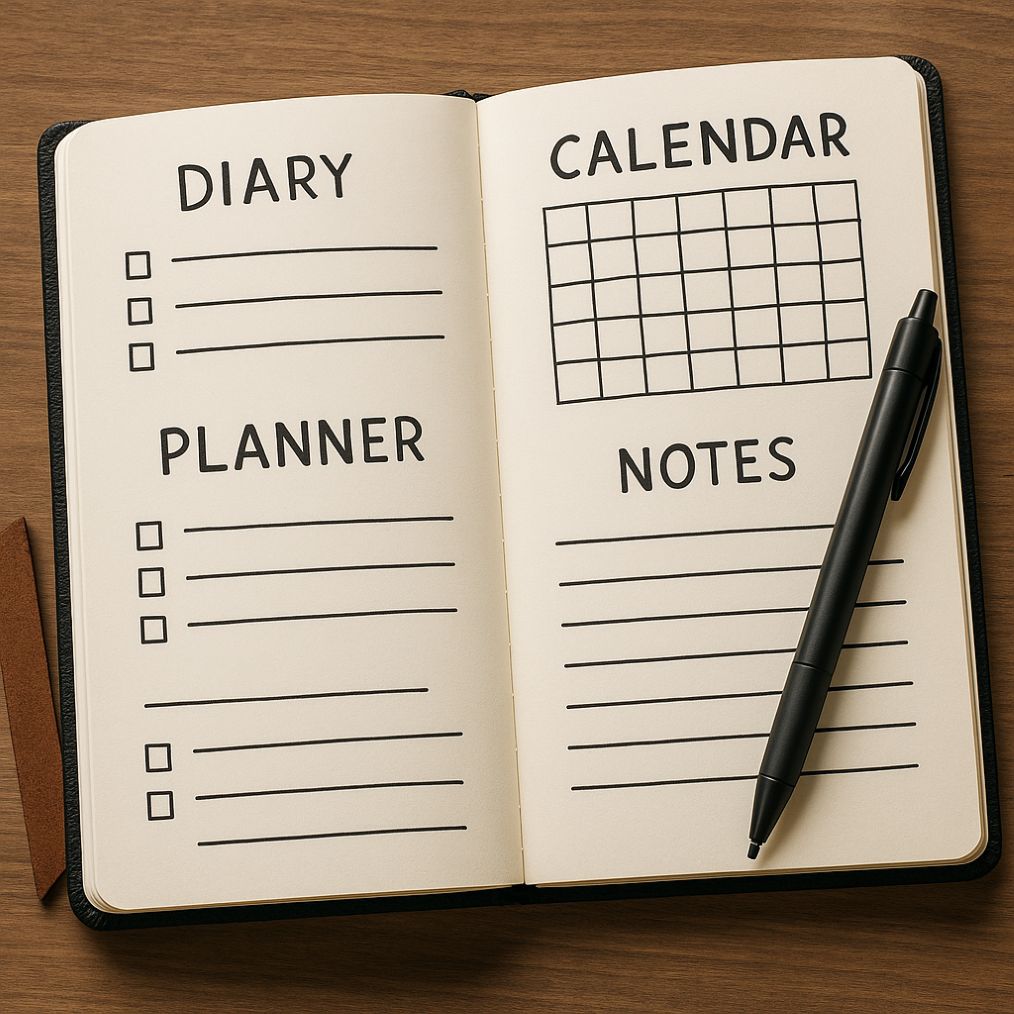
In this article, I describe my notebook system. It’s not just a note taking system, it’s much more than that. It’s my diary, calendar, planner and note system all in one. This system has evolved over the years and is still evolving day by day. Over time I’ve added different facets to it, as I’ve gradually come away from digital.
1. The Problem with my old system
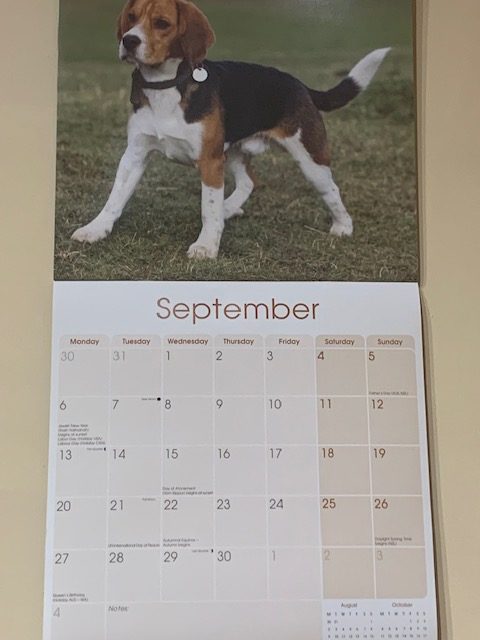
I didn’t always have this system, throughout the 2000’s I gradually moved from the old paper-based systems to digital apps. First my day-to-day diary went to Outlook and then Google Calendar. Next the wall-based calendar went from a useful planning tool to just a wall decoration with pictures of Beagle puppies on it. This too was replaced by Google Calendar. I’ve now gone back to the Beagles.
My written to do list then went digital. I’ve tried many digital to-do apps over the years – Remember the Milk, Goals to Action, Zendone, Nirvana, Outlook to name a few. The same problem always returned. I will describe this later.
In my career in sales, I’ve always tried to write down as much as possible. I’m firmly in the ‘faintest ink is more powerful than the strongest memory’ camp. I’ve had Sales Managers early in my career who indoctrinated this into me, so yes, I am a convert. Eventually though I went digital with this too. I’ve scanned notebooks and used apps like Evernote to try to organise everything.
So, by the end of that decade, I was firmly in the digital camp. Oh, how clever I thought I was. But there was a problem that I alluded to before, that kept coming back. None of these apps were designed for me.
a. The problem with Online apps
I would go from App to App trying to find the perfect one. Eventually I realised there isn’t a perfect app. They are all designed for the maximum audience possible and so they lose their flexibility. The problem is that you would reach a point where the App couldn’t do something you want it to. I would have to design my own App or, heaven forbid, go back to paper.
b. Separate to do lists/calendar/journal/planner.
Firstly, you need many different apps to cover all the bases. Either that or the App is so generic that it won’t do anything. Sure, you have great Calendar apps that synch across all your devices, like Google Calendar, but this fails as a to do list and note taking device. (For me anyway).
c Several Notebooks all over the place
The first digital device I gave up was the note taking. I went straight back to notebooks. I had a day-to-day work notebook, personal notebook, journal and a little pocket notebook to carry round. There is a logic to keep notes from separate areas of your life in separate notebooks. I get that. However, I now subscribe to a whole life philosophy. Just like in David Allen’s book ‘Making it all work’ all the areas of my life need the same attention but not necessarily at the same time. Also, I might get ideas for personal projects whilst I’m at work and get ideas for business whilst I’m sat journaling. So, my mind was made up – One Notebook for everything.
2. Benefits of having One Notebook for everything.
If you’ve got notes all over the place, like I used to have, then why not consider consolidating all of them into One Notebook productivity system. Here are the reasons why I think it’s a great idea.
a. Notes all in one place
Firstly, all your notes are in one place, which means it will be easier to access information when you need it. One of the worst scenarios that I can think of is when you know you have written some piece of critical information or a great idea, but you don’t know where you wrote it. Or it’s in another notebook, that you left at home! It’s worse than not writing it down at all.
On notebook = one place to look = simples.
One of the things that held me back from having one notebook for everything, was that if I was in a business meeting, I didn’t want customers/colleagues to see my personal stuff. A simple way round this was that with every business meeting, I started my entry with a new 2-page spread, so that nothing else could be seen. This will obviously mean that you are leaving unused gaps in your notebook, however you can always go back and use this for any other notes.
b. Cross fertilisation of ideas.
Another hidden benefit is that you get cross-fertilisation of ideas between the different areas of your life. As the personal melds into the business, you will get moments of inspiration as you suddenly make connections. This mirrors how your brain works anyway. You don’t have different areas of your brain for different areas of your life. The infrastructure of your brain can cope with everything all at once.
c. Goals to actions
The different areas of your life operate in real time in-the-now. As I said before, your brain can cope with that. Where your mind copes less is with different timescales and as David Allen calls them ‘Horizons of Focus’.
Let’s say you perform a brain dump, or as Allen suggests, a mind-sweep. You write down everything that you would like to be, do and have; you also list all the things you want to change and all the little jobs that have built up. If you then look at this list you will, I’m sure, have many items from lots of different horizons of focus. You might have a range from ‘Get dog food’ all the way up to ‘Solve climate change’ and everything in between.
How Goals to Actions works is that you label each item with whether it is a task, project, target, goal, mission or vision. You can then treat them differently and appropriately. You can even separate tasks down to how long they will take. For instance, jobs that will take less than two minutes or two hours or a day. I will show you how to do this later.
d. Calendar for planning
In my notebook lives my calendar. I do use a Google calendar to synch across all my devices, but I also like the kinaesthetic value I get from physically writing out my calendar in the Notebook. Having a digital calendar/diary is great for reference and having this synched means that it is always available. When I am in planning mode, however, there is nothing better than having the written planner in my hands. For me, it seems to allow my planning to flow.
3. Choosing your One Notebook
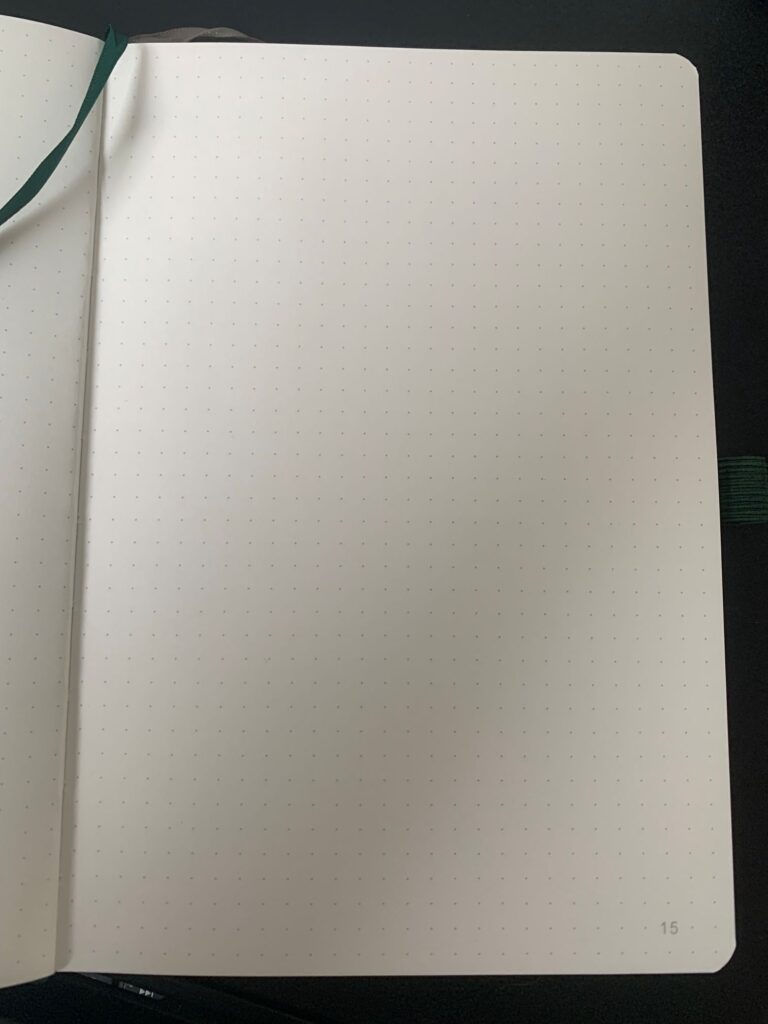
The first thing you will need to do is obviously choose the right notebook. I’ve experimented with various sizes of notebook such as A4. This was fine in meetings, as it is what most people use, but it was too cumbersome to carry round. I finally settled on A5 (210mm high by 148mm wide). My preferred paper layout is squared as this helps when you draft charts in landscape layout.
I always make sure the notebook has a bookmark ribbon and a double ribbon. These will help you mark off your current page or some page you need to refer back to quickly.
4. How to build your one notebook productivity system.
Some notebooks already come numbered, which is ideal. If not, you will number the pages in one of each corner. You don’t need to do this all-in-one go, I just number each page in sequence as and when I come to it.
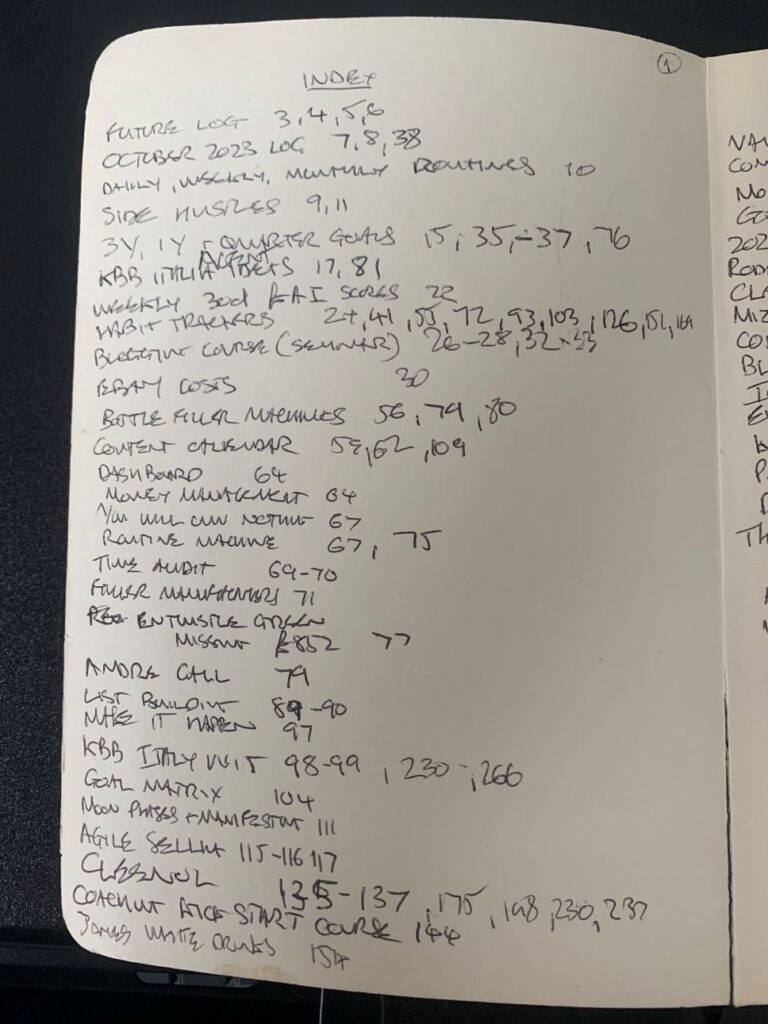
a. One Notebook Index
On the first 2-page spread, title this Index. As you start to add entries into the notebook, put the title and page number on the index sheet. The index sheet will be page 1-2.
b. Calendar system
The first thing I do with a new notebook is add my calendar system. As I said before, I still use Google Calendar across my devices, but I still like to use a paper system for planning.
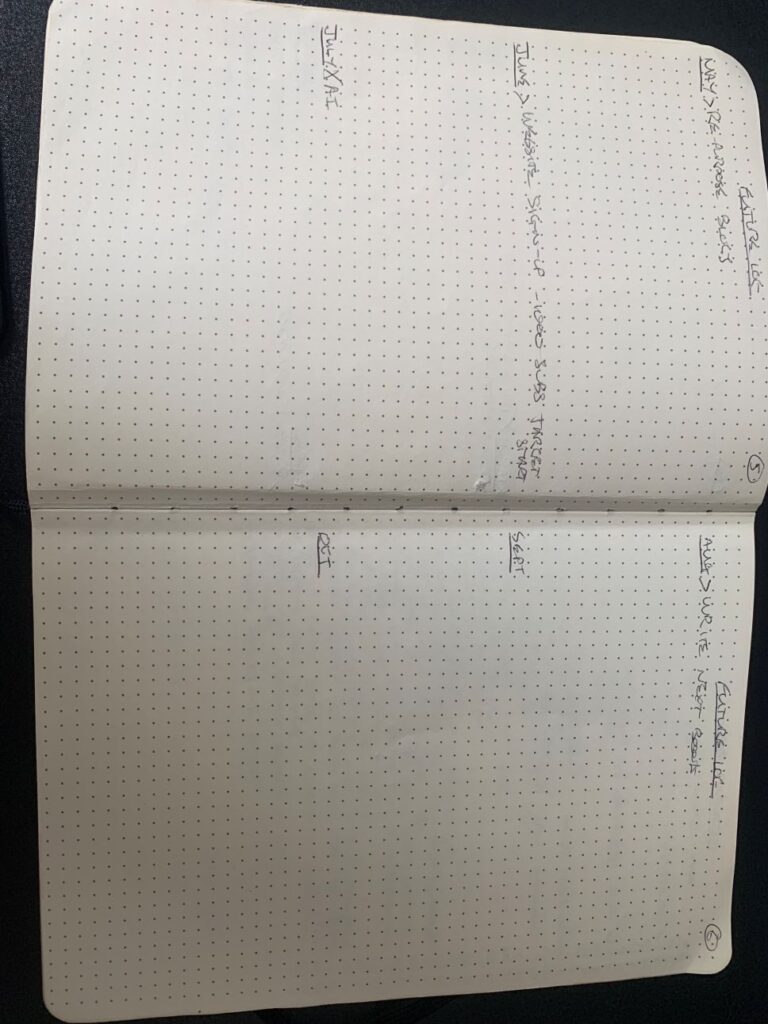
i. Year Planner/Future Log
On the next 4 blank pages after your index, number the pages (3-6), title them Year Planner.
Here I use one single page for 3 months. In an ideal world each new notebook will be started in January, however you may be starting yours in October. In that case use the first blank page as November, December, January and give each month a third of the page. Continue on the next page with February, March, April. Then on the next 2-page spread, continue through to October. You could use more pages to finish off the calendar year if you wish.
Enter Year Planner onto your index. Now you can fill this in with the important events for the following 12 months: Birthdays, Holidays, key appointments, deadlines. This will then give you a bird’s eye view of your life in the following year.
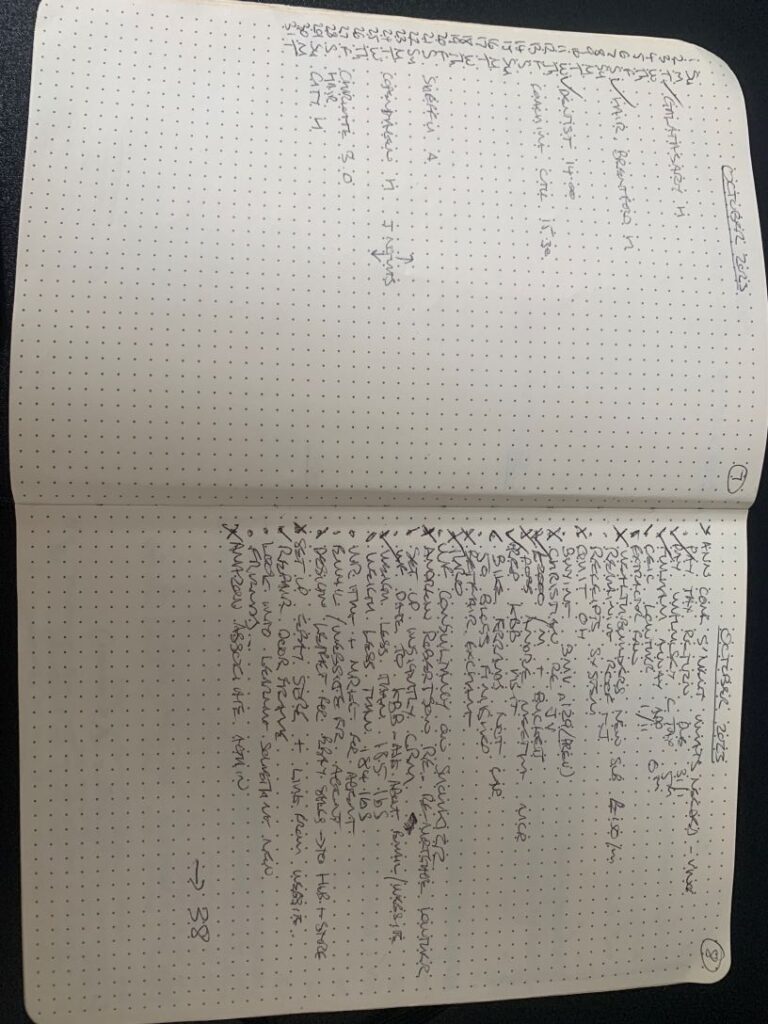
ii. Monthly plan
If it is indeed October when you start your new notebook, then the first month plan will be for November. Use the next 2 blank pages (7&8) and title them November [year]. Add this to your index. On the left side page will be your monthly calendar, with date and day name. Enter all your key entries from the year plan, for that month, plus any other reminders. Choose a date for your Monthly Review and enter this. I do mine on the first day of the month. On the right-hand page, will be your list of tasks for the month. it will also be for your goal stepping stones (more on this later).
iii. Weekly Plan
On the next 2 blank pages (9&10) start your first weekly plan. Divide the left page into 7 with date/day. Here you will write in your main appointments for the week, plus any recurring weekly activities. On the right-hand side write down your weekly goal steps, tasks and everything you want to achieve that week. I don’t put the weekly plan into the index as you should find it easily enough if you follow the chronology. I plan this out for each upcoming week, at my Friday weekly review.
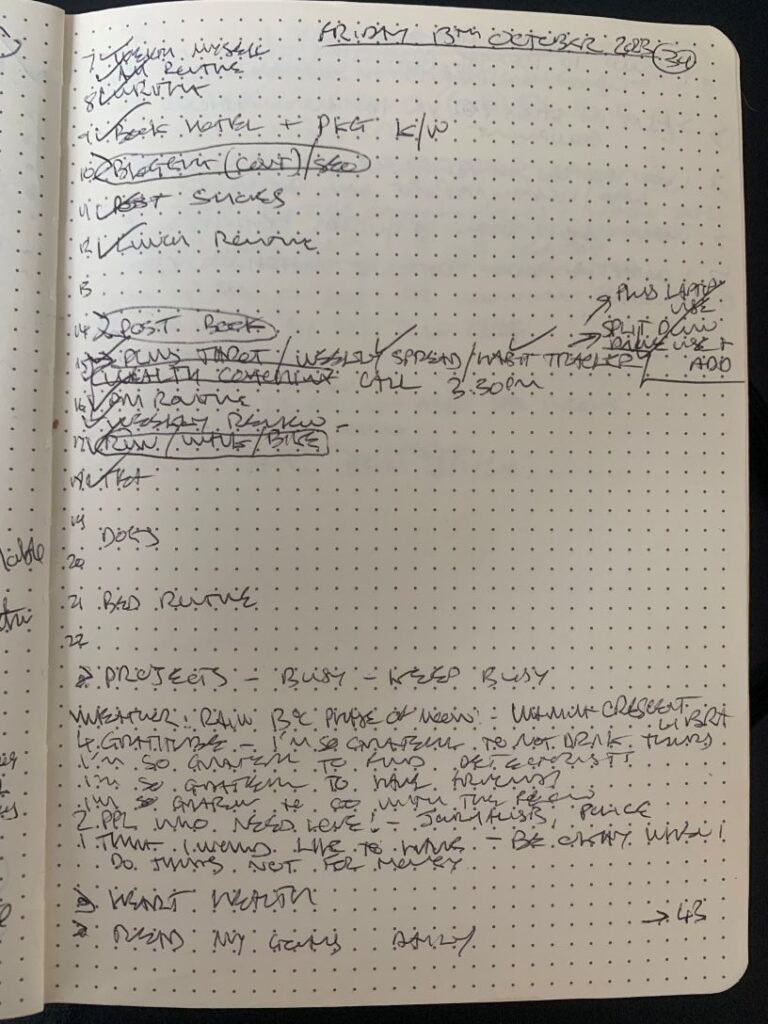
iv. Daily plan
On the next blank page {page 11 in our new notebook) you will start your first daily plan, which will be the following day from when you are writing. Starting from when you awake till when you go to bed, mark down the hours. I usually put one line for every half hour and use this daily plan to fill out my day.
I will list everything, from morning routine, meals, getting ready and all appointments. The aim here is to fill the day with planned activity, so that you can see at a glance what free time you have, for working on goals and projects, or leisure. In the gaps in the daily plan, you can add key tasks and priorities.
It’s not unusual for things to change during the day, but here you will have at least a plan to keep you on track. I will repeat this every evening for the following day’s activities.
b. Journal of what happens: Meetings and Agendas
My one notebook for everything also becomes my journal. On the next page after each daily plan, I will write notes and ideas from everything that happens. As actions arise, I will write them down here, so that I can carry on with what I was doing. I will refer to these each evening, so that I can add these actions to my task lists. For specific meetings, as I said before, I will start a new 2-page spread with a title and date. I will also write out my preparation notes and agenda in this entry, plus an entry into the index.
If I ever have subsequent related meetings with the same customer or subject, I will refer to the page number of the previous new entry, at the top of the page. This way if I ever have to refer to previous entry notes, I can quickly find the relevant page.
c. David Allen’s Horizons of focus
Place all these items in separate lists in your notebook so that you can tackle like-items together. It would look something like this:
Two-minute tasks
Two-hour tasks
Day tasks
Projects
Targets
Goals
Mission
Vision
i. Which Horizon First?
Then you could start tackling the smallest horizon jobs first i.e., all your two-minute jobs together. Then start on your two-hour jobs. Slowly work up the horizons. When you get to Projects, these will need to be planned out, so that you breakdown the sequence of actions and you know what the next action is. Then you can tackle these actions. Once all your projects are underway, start on targets. For instance, your target might be to reach a certain sales figure, so what are the various projects you need to finish to reach this target. Again, once you have a list of projects, break these down in the same way as before.
Next come goals and these will be broken down into targets and projects, which can be broken down further. And so on, you get the idea. With this method you are getting things done from the ground up and the sky down, so to speak.
I can recommend reading my post David Allen’s Getting Things done, where I explain more about action lists. Essentially what you will do is have one page for each of the following lists. Mark these off in your index.
ii. Purpose and Principles
Write down you big Whys. Why are you doing the job you are doing? What is your purpose as a parent? Why do you want to make money?
iii. Vision
How do you see your life in say 3-5 years. You can write this out as if it were a narrative that your future self is dictating.
iv. Long Term Goals
What do you want to achieve in the next 1-2 years, in all areas of your life.
v. Projects
What projects do you want to start and continue, to reach your goals. What else do you want to do, that will take more than one action to complete. Again, see my post on David Allen’s Getting Things done, which explains the mind sweep method of building up your projects list.
Projects List. With projects you will have a double page spread for your list of projects. Mark this off in your index. Project action lists. For each single project, there may be further planning required, especially if they are complex and multifaceted. In that case, devote a new page to this project and place reference it in your index.
vi. Action lists
Allen recommends that you have separate task lists for each context. I.e. where are you when you nee to do this project? These contexts will be unique to you, but examples could be At home, At the office, On the phone, On the computer, Errands. Have separate page for each context list and mark this in your Index.
As well as actions to do list, I will also have a list of things I am Waiting For. These could be tasks I’ve delegated, or answers I am waiting for.
Someday maybe: for tasks and projects I’m not ready to do now or are just ideas, I have a someday maybe list. This acts as an incubator, which I review every week. If anything is appealing, I will add it to a list to do now. If not, I can just leave it there or remove it.
d. Checklists
I’m a great fan of checklists. Whenever I put one together, it goes into my One Notebook for Everything. They are a great way of remembering what you need to do to complete a certain task. For instance, I have a Travel checklist. This is a list of things I need to check of when I’m preparing to travel. Some other checklists I have include the regular reviews.:
Annual Review
Quarterly Review
Monthly Review
Weekly Review
Daily Review
5. Other uses of the one notebook for everything
As I now use this one notebook for everything, some of the other things included are:
a. Habit/ kaizen trackers
Where I gamify my personal development, by trying to beat my previous weekly score. Check out my short book Kaizen and Habit Stacking where I go into a lot more detail on how I make small and constant improvements in my habits, which add up to massive changes.
b. Gratitude:
Every morning I write out at least 4 things that I am grateful for. I enter this at the bottom of my daily planner.
c. Dreams Record
I used to have a separate notebook for recording my dreams, but now these also go into my one notebook. You could record these after the daily plan, so they are in chronological order. If you would prefer these to be isolated in the notebook you can treat these as if they were related meetings. Start a new 2 page spread headed dreams and enter the page number into your index. Then record your entries with the date below this. When you finish these 2 pages, proceed to the next blank 2 pages. On the top of both spreads, you can refer to the other spread page number so you can quickly scan through your dreams over time.
d. Books I’ve read.
As recommended in Routine Machine by John Lamerton, after each nonfiction book I read, I will write a report on it before I start the next book. This report is based on my notes taken from reading the book and you guessed it; I write these notes in my one notebook.
I’ve developed and refined my system over a couple of decades and I’m still refining it. Everybody’s system would be unique to them, but if you wanted to start from afresh, I would recommend the following 2 books: