

In our series of blog posts: The Future of Money, we’ve started looking at strategies to protect your wealth and to be ready for opportunities. I’ve already touched on how Cryptocurrencies can form part of your armoury. In this post I take a deeper look at Crypto for beginners so that you should, by the end of the post, have an overview of what they are and why you should ‘invest’ in them. I’ve put ‘invest’ in inverted commas because is it really an investment? Read on to find out.
Disclaimer:
Just because I’m financially independent doesn’t mean you can sue me if you blow your savings on crypto llamas. This blog is for education and entertainment—not financial advice. Before making any money moves, speak to a qualified (and hopefully not-broke) Independent Financial Advisor. You know, the kind with certificates and a filing cabinet.
Understanding Cryptocurrency
Firstly, let’s look at what it is. Cryptocurrency is a form of digital money based on a blockchain network. It is decentralised, meaning that it isn’t controlled by a government or a central bank. They are kept on an unchangeable online ledger that records all transactions.
What is blockchain?
In simple terms a blockchain is a shared digital ledger that is distributed across several computers. The chain is made up of a number of ‘blocks’. Each block is a record of a number of transactions. Each transaction is linked to the previous and each block is also linked to the previous. All records are in chronological order, which means that it is difficult to hack because a hacker would have to change every block in the chain.
Each block contains data, usually transaction records, including the sender and receiver of a transaction, a timestamp and the amount and type of currency sent.
Why should it form part of your portfolio?
The major benefit of crypto currencies are that they are outside the control of the government or a central bank. If you read my post on What is a CBDC and why it matters to everyday investors, you will understand why this is appealing.
Currency, speculation or store of wealth
Initially cryptocurrencies were designed to be, well, currencies. They were meant to be an alternative means of financial exchange; a means of buying things in privacy. As they are also outside of the traditional banking system, they are fairer – think of how much the payment card companies take off small businesses for each card transaction.
For some cryptocurrencies there will only ever be a finite amount of them being mined. This brings with it an element of scarcity and therefore price inflation and volatility. This then attracts individuals who want to speculate, that the price will rise. This is not what they are meant for.
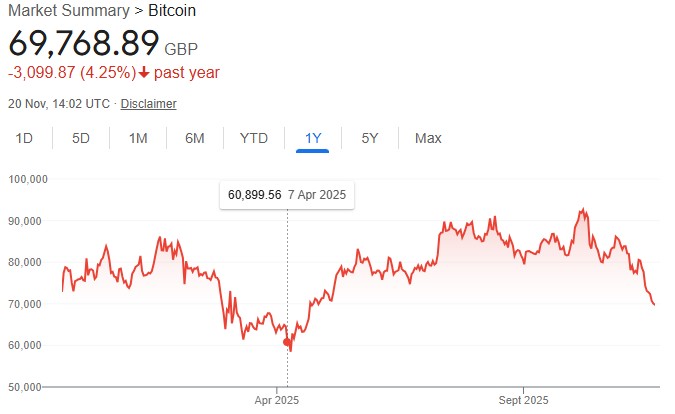
Other people will also invest in crypto as a store of wealth, to add an element of diversification to their portfolio. So, what are they really? Well, it depends on what you want from them. Don’t invest just for the sake of it because everyone else is, or some guru tells you to.
If you want to bet on Bitcoin going to £100k, then go for it. (Depending on when you read this it may have already smashed that target).
Others may wish to buy cryptocurrency as a store of wealth, like a kind of digital gold. They may see this as a hedge against inflation and other economic issues.
For me though, I’ve decided to buy cryptocurrency as an insurance against CBDCs. If ever they come in, I will hold physical cash and crypto so that if the worse was to happen I would have some means of paying for the basics.
Key features of Cryptocurrencies
What are the key features of cryptocurrencies that make them appealing.
- Decentralised: They are controlled by a distributed network of computers, not a single institution. They are not state backed.
- Secure: They will use cryptography to secure transactions. However, they are at risk of scams. See later.
- Asset: They are an asset, not just currency, as I explain above.
- Global and borderless: You should be able to make transactions across borders seamlessly.
However, there are some downsides:
- Volatility: Prices can change dramatically and quickly. Good if you want to speculate; not so if you want to spend them day to day.
- Requires internet + crypto wallet: How will they work if there is an internet outage?
- Transactions speeds vary: From fast to slow depending on the blockchain.
- No intrinsic backing: If your chosen cryptocurrency blows up, you will be on your own.
Essential Safety Rules
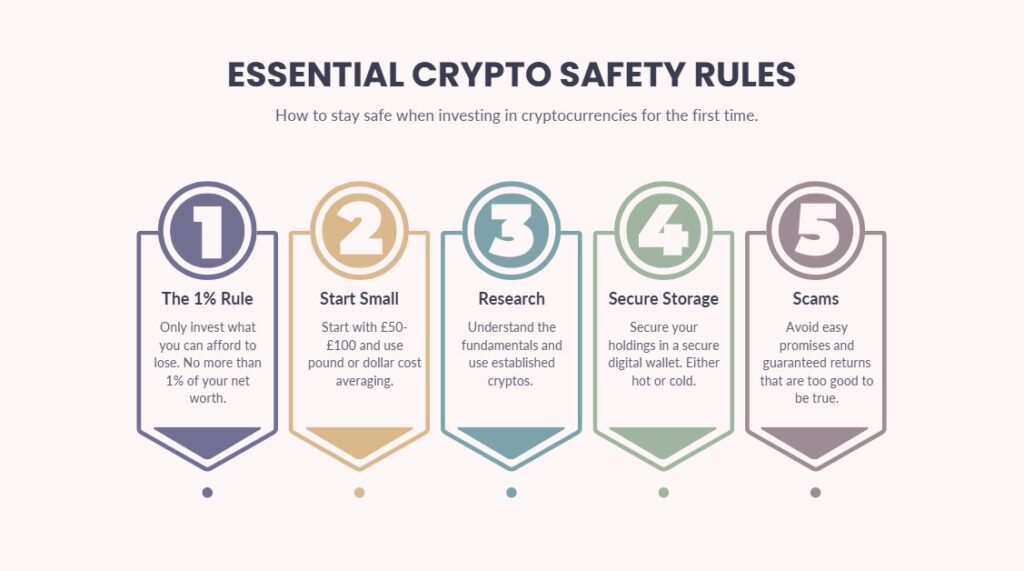
If you are interested in dipping your toes in the water with cryptocurrencies, then here are some quick safety tips:
Only invest what you can afford to lose.
This is the most important rule. Crypto is a highly speculative and volatile asset class and you should be prepared for the possibility of losing your entire investment. It probably won’t happen but you should be able to write it off if it does. If you are using cryptocurrencies as a store of wealth, have a maximum exposure of no more than 1% of your net worth.
Start small
Begin with a small amount (even £50–£100 is sufficient for learning) and gradually increase your exposure as you gain experience. As bitcoin is currently trading at over £70,000 buying one coin would be a steep task for most. You can however buy fractions of bitcoins down to 8 decimal places i.e. one Satoshi (named after the inventor) = £0.0007, at the time of writing.
Research thoroughly
Understand the underlying technology, project fundamentals and market trends before committing funds. Stick to major, established cryptocurrencies like Bitcoin (BTC) and Ethereum (ETH) initially, as they are more resilient.
Use secure storage
Store significant holdings in a secure digital “wallet.” For added security, consider a hardware (cold) wallet, which stores your crypto offline, rather than leaving substantial amounts on an exchange (hot wallet). I’ll talk more about cold wallets in the next post. Subscribe to my newsletter so you don’t miss out.
Beware of scams
Avoid anything that promises easy or guaranteed returns. The market is rife with hype and speculative “meme coins”.
How to Get Started
If you are like I was, I didn’t have a clue on how to get started. Here then is a quick guide to get you up and running, should you choose.
1. Choose a reputable exchange or broker
This is the platform where you will buy, sell and trade cryptocurrency. Look for regulated platforms that use security measures like two-factor authentication (2FA). Popular platforms include Coinbase, Kraken and Binance.
2. Create and fund your account
Sign up and verify your identity, which is typically required by regulated platforms. Once verified, you can link a payment method and deposit funds.
3. Make your first purchase
Select the cryptocurrency you want to buy (e.g. Bitcoin or Ethereum), enter the amount and place your order.
4. Secure your assets
Transfer your purchased crypto to a secure personal wallet for long-term storage. These wallets can be hot or cold (see next post). Examples of hot wallets would be software on your pc/phone or a hosted exchange. For small amounts you could use the same exchange broker. Cold wallets include hardware (memory drive) or on paper, where private keys are written down.
5. Stay disciplined
If you are planning to purchase cryptocurrency over time, rather than in one go, use strategies like pound or dollar-cost averaging. This is where you invest a set amount regularly, regardless of price swings, to build your position over time. This then avoids emotional decision-making. See my post Invest for Security and Growth, where I explain how pound or dollar cost averaging works.
By following these guidelines, you can safely begin your journey into the world of cryptocurrency.
Closing
At the end of the day, crypto isn’t about chasing moonshots or trying to outsmart the market. It’s about adding one more layer of protection to your overall wealth strategy. If you understand what it is, how it works and how to handle it safely, it can be a small but powerful tool in a world that’s shifting fast toward digital control and centralised oversight.
Start small, stay cautious and treat crypto as insurance, not a lottery ticket. Do that and you’ll be well ahead of the curve when the future of money becomes the present.