

In this latest post on the Future of Money and wealth, I will introduce the concept of adding Global Resilience to your portfolio, and in this post specifically buying property abroad. In a previous post: Property Investing in a Currency Collapse, I talk about how you can mitigate against a calamitous scenario of your local currency collapsing. One protective method is buying property abroad. Here I take a deeper look at this strategy.
For full disclosure at the time of writing, I do not own any property abroad, however this is something I am exploring. This blog post is therefore more me ‘thinking aloud’ rather than teaching you what I know. Hopefully, we will both gain something of value.
Why buy property abroad?
Buying property abroad can be a valid strategy for global financial resilience, offering asset and currency diversification. It can also give you, potentially, higher rental yields. It may also give you a “Plan B” residency or citizenship if the need ever arose. However, this decision involves significant risks related to legal complexities, tax obligations and currency fluctuations that require careful planning and professional advice.
Potential Benefits of buying foreign real estate
Here are some benefits you would receive from owning foreign real estate in order of lessening importance for me. You might have them in a different order. Let me know in the comments what is most important for you.
Portfolio and Currency Diversification
For me, the reason why I am looking into it is to spread my investments across different countries. This would help mitigate the risks associated with economic or political instability in my home country (UK). Holding assets in a stable or appreciating foreign currency can also hedge against depreciation of your home currency.
Potential for Higher Returns
A secondary reason for me, is the potential for higher returns. Many international markets offer potentially higher rental yields compared to mature, high-cost domestic markets. Property in developing areas or tourist hotspots may also experience significant capital appreciation over time.
Alternative Residency or Citizenship
As I alluded to before, a ‘plan B’ of residency in a foreign country could be a prudent step. In some countries, purchasing property can provide a pathway to permanent residency, long-term visas, or even citizenship. This can be valuable for increased global mobility and security, especially in this globalised world. Popular programs have included those in Portugal, Greece and Türkiye.
Lifestyle and Personal Use
Owning a second home can serve as a personal retreat for holidays or a future retirement location, which can also be rented out when not in use to offset costs and generate income.
Key Risks and Considerations
As with any upside, there is also a downside. Here are some risks involved in buying abroad and some other considerations.
Legal and Regulatory Challenges
Each country has unique laws governing foreign property ownership, zoning restrictions and landlord-tenant rules. These can be complex to navigate. You will need to find independent legal advice to ensure due diligence and avoid issues with title deeds or outstanding debts on the property. You would have to make sure that your advisor is expert in the jurisdiction you are looking to buy into.
Tax Implications
You will have tax obligations in both your home country and the country where the property is located. This will include income tax on rental earnings, property taxes and capital gains tax if you ever sell. Consulting an international tax consultant is essential to avoid double taxation and plan effectively.
Currency Risk
Exchange rate fluctuations can impact the initial purchase cost, ongoing mortgage payments, maintenance expenses and the amount of repatriated rental income or sale proceeds. For instance, if you collect rent in Euros and exchange it into Pounds Sterling any fluctuations in the exchange rate mean that the pounds you receive may vary. Using specialist currency exchange services and tools like forward contracts can help manage this risk.
Distance Management Issues
Managing a property remotely can be challenging. Hiring a local property management company is often necessary for maintenance, tenant screening and rent collection, which adds to the overall costs.
Market Volatility and Hidden Costs
Foreign markets can be unpredictable, and it is easy to overlook hidden fees, such as transfer taxes, stamp duty or specific local charges. Thorough research into local market trends is critical before committing.
Steps for Informed Decision Making
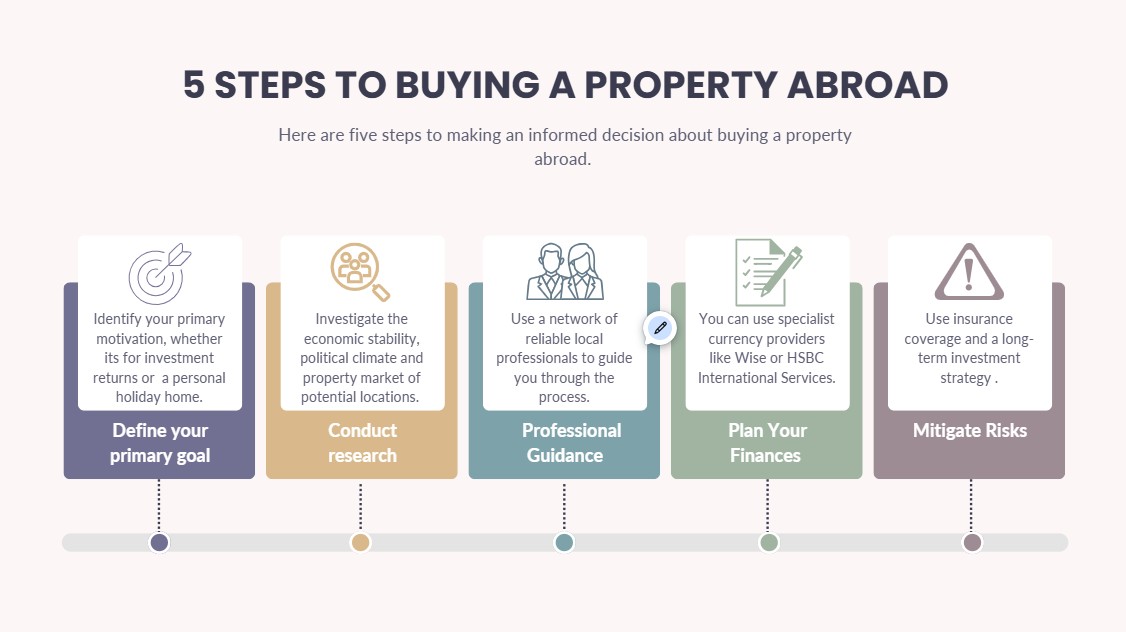
If you are planning to go ahead and buy abroad, here are some steps to make the process smoother.
1. Define Your Goal
Clearly identify your primary motivation. Is it purely for investment returns, as a personal holiday home, or a path to alternative residency? Or if like me, is it a way of diversifying your portfolio, although I like all the benefits.
2. Conduct Thorough Research
Investigate the economic stability, political climate and property market of potential locations. The Global Property Guide provides resources for market analysis.
3. Seek Professional Guidance
Engage a network of reliable local professionals, including English-speaking lawyers, tax consultants and estate agents, to guide you through the process.
4. Plan Your Finances Wisely
When you are securing your financing (often requiring a larger deposit for overseas properties), budget for all associated costs. You can use specialist currency providers like Wise or HSBC International Services for secure and cost-effective money transfers.
5. Mitigate Risks
Consider insurance coverage and establish a long-term investment strategy aligned with your risk tolerance.
Closing
Buying property abroad isn’t about chasing a glossy dream, it’s about stacking real options for your future. Whether you’re eyeing better yields, lifestyle upside or a hedge against whatever direction the UK market takes next, the opportunity is there for those willing to look past the headlines and run the numbers.
If this idea keeps tugging at you, stay tuned, I’ll be breaking down specific countries, realistic budgets, and the due-diligence steps that separate solid investments from expensive regrets. Also keep an eye out for the next part in this series, where I talk about building your wealth across borders. Sign up so you don’t miss out.