In this latest post on the future of wealth, we delve into the world of Decentralised Finance Protocol (DeFi). We will also explore how you can start to use it. With that in mind we look at your first £1,000 in a Decentralised Finance Protocol.
In the last post in this Future of Money series: Crypto For Beginners: How to Use Cryptocurrency for Wealth Protection Not Speculation, I talked about why entrepreneurs should start treating cryptocurrency as part of their wealth-protection toolkit rather than just a speculative play. I also introduced the idea of hot and cold wallets. In this post, I want to go deeper into why every entrepreneur should have a cold wallet as standard.
Why Cold Wallets Matter
If you’re running a business and dealing with cryptocurrency in any form, a cold wallet isn’t optional, it’s your seatbelt. It’s the single best way to lock down your digital assets and stay protected from online threats, dodgy platforms and unexpected failures. In short, it keeps you in full control of your money.
Hot Wallets vs Cold Wallets
A hot wallet is simply a crypto wallet that’s connected to the internet. Great for speed and convenience. Terrible for security. These are the apps on your phone or laptop, or the wallets that exchanges give you by default.
A cold wallet is the opposite — completely offline. Your private keys live on a hardware device or even written down on paper. There’s no online connection, which means the usual cyber threats don’t get a look-in. You’ll still need to store that device or key safely, but you remove the single biggest risk: being online.
Why Entrepreneurs Should Be Using Cold Wallets
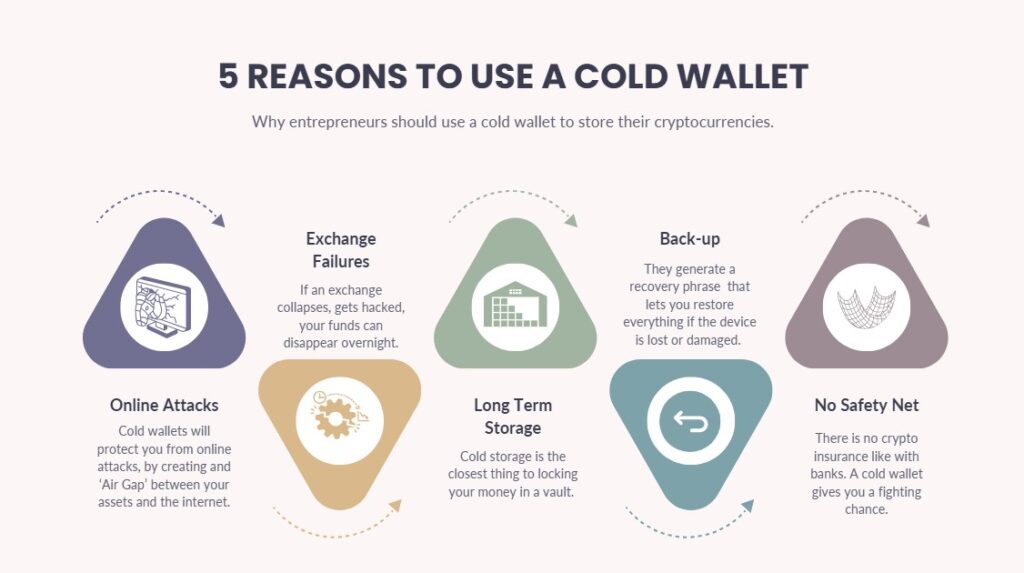
1. Protection From Online Attacks
Cold wallets create a physical barrier — an “air gap” — between your assets and the internet. That makes them basically immune to hacking, malware and phishing scams. If it’s not online, it can’t be attacked online.
2. Protection From Exchange Failures
If your crypto sits on an exchange, the exchange owns the keys. And if they own the keys, they ultimately control the coins. If an exchange collapses, gets hacked or freezes withdrawals, your funds can disappear overnight. A cold wallet puts ownership back where it belongs — with you.
3. Ideal for Long-Term Storage
If you’re holding crypto as a long-term store of wealth, cold storage is the closest thing to locking your money in a vault. Hot wallets are great for small amounts you need access to quickly, but not for anything meaningful.
4. Built-In Backup and Peace of Mind
Most hardware wallets generate a recovery seed phrase — a list of 12–24 words that lets you restore everything even if the device is lost or damaged. Store that seed offline (a safe or fireproof box works well), and you’ve got a bulletproof backup.
5. No Safety Net From the System
Traditional bank accounts are insured. Crypto accounts are not. If something goes wrong, there’s no FSCS stepping in. That’s why security sits squarely on your shoulders — and why a cold wallet gives you a fighting chance.
A Practical Plan: The 80-10-10 Approach
A balanced setup, many security pros recommend looks like this:
80% in a cold wallet for long-term storage and maximum security
10% in a hot wallet for day-to-day activity
10% for experimentation — new platforms, trading or testing ideas
This way you stay protected while still having the flexibility to operate and take advantage of opportunities.
Disclaimer: Just because I’m financially independent doesn’t mean you can sue me if you blow your savings on crypto llamas. This blog is for education and entertainment—not financial advice. Before making any money moves, speak to a qualified (and hopefully not-broke) Independent Financial Advisor. You know, the kind with certificates and a filing cabinet.
For entrepreneurs, a cold wallet isn’t just a nice-to-have. It’s a fundamental part of staying secure, staying independent and keeping your digital wealth firmly in your hands. If you’re looking at hardware options, Ledger and Trezor are two of the most established brands on the market.
A cold wallet is one of those tools that instantly puts you in a stronger position the moment you start using it. In a world where digital money is becoming the norm and cyber risks are only increasing, having full custody of your assets is not just smart, it’s part of being a resilient, forward-thinking entrepreneur. With a simple setup and a clear system for managing your crypto, you give yourself security, flexibility and the confidence to operate on your own terms.
I will be continuing this theme of your wealth strategy in this new-money era. Sign up to the newsletter so you don’t miss out.
In our series of blog posts: The Future of Money, we’ve started looking at strategies to protect your wealth and to be ready for opportunities. I’ve already touched on how Cryptocurrencies can form part of your armoury. In this post I take a deeper look at Crypto for beginners so that you should, by the end of the post, have an overview of what they are and why you should ‘invest’ in them. I’ve put ‘invest’ in inverted commas because is it really an investment? Read on to find out.